You Don’t Need to Get in Shape Before You Start Yoga
Have you ever thought, “I’d really like to try yoga, but I need to get in shape first”?
Maybe you want to get a little stronger first. Or work on your flexibility. Maybe your balance isn’t what it used to be, you haven’t exercised in years, or you’re worried you’ll walk into a yoga class and everyone else will know exactly what they’re doing while you’re trying to figure out which foot goes where.
I hear versions of this all the time.
But there’s a problem with the idea that you need to get in shape before you start yoga:
You’re trying to prepare yourself for the very thing that can help you build those skills.
You don’t get stronger so you can start yoga. Strength is something you can build through yoga.
The same goes for flexibility, balance, coordination, mobility, and even confidence in your body.
Those aren’t prerequisites for admission.
Prefer to listen? This week on Yoga for Longevity, I’m talking about why you don’t need to get in shape before you start yoga, and how to find a practice that actually meets you where you are.
There is no universal starting line for yoga
I think one reason people hesitate to begin is that they have an image in their heads of what someone who “does yoga” looks like.
Flexible. Strong. Coordinated. Able to get up and down from the floor easily. Familiar with all the poses.
But none of those things determine whether you’re ready to begin.
You can be stiff.
You can feel weak.
You can have terrible balance.
You can be completely out of practice.
You can start there.
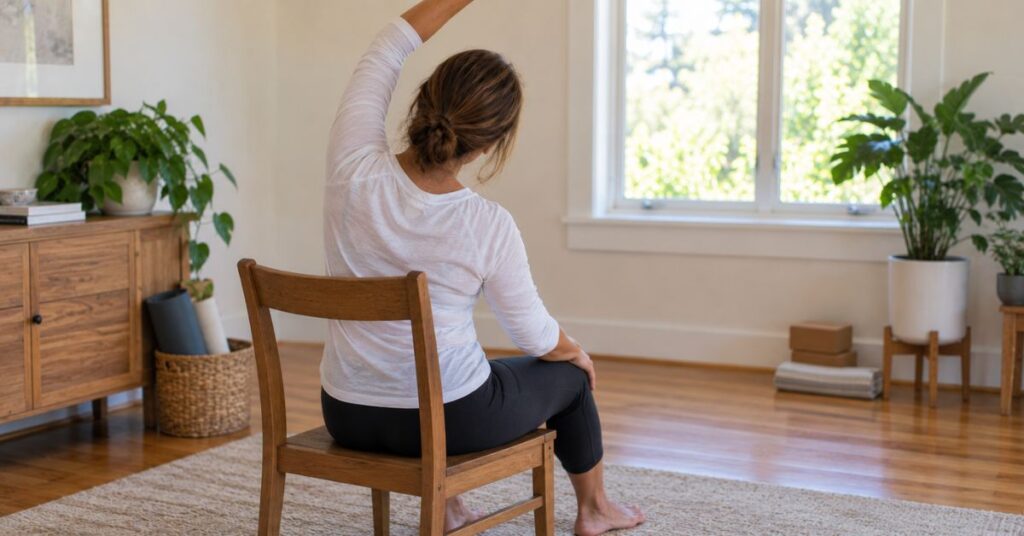
A good yoga practice doesn’t require you to make your body fit yoga. The practice can be adapted to fit the body you have today.
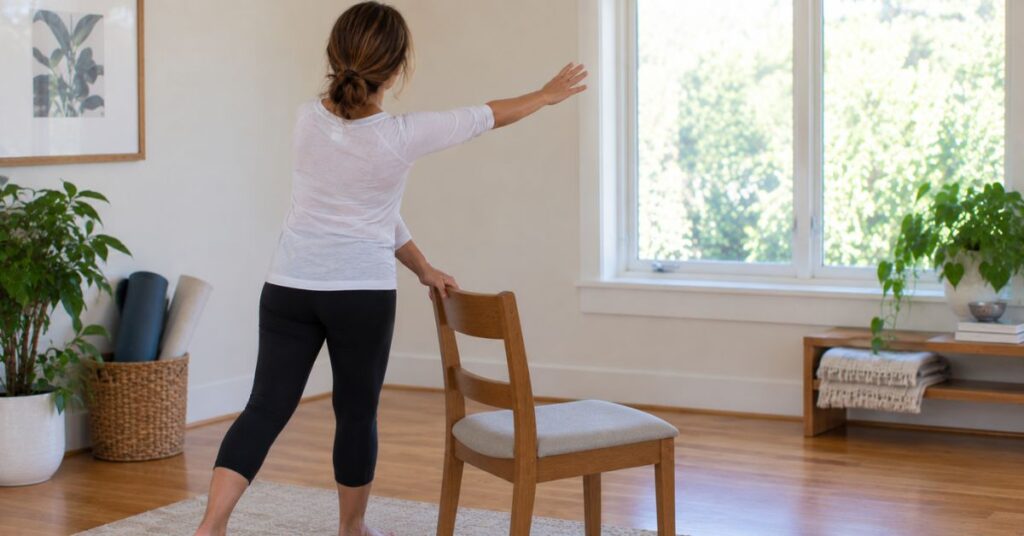
That might mean changing your range of motion. Using a chair, wall, blocks, or other props. Taking breaks. Starting with a different variation of a pose. Spending time gradually developing the strength or mobility you need for something that isn’t accessible yet.
Your starting point doesn’t have to look like anyone else’s.
But finding the right yoga practice matters
There’s an important piece of this conversation that I don’t want to gloss over.
I believe yoga can be adapted for an enormous range of bodies and abilities.
But that doesn’t mean every yoga class is appropriate for every person.
I’ve talked to so many people who tried yoga once and had a terrible experience.
Maybe the class was labeled “beginner” or “gentle,” but it moved much faster than they expected. They couldn’t follow what was happening. They felt uncomfortable or embarrassed. Sometimes they were even hurt.
And understandably, they walked away thinking:
Yoga isn’t for me.
But yoga may not have been the problem.
That particular class may not have been right for you.
There are many styles of yoga and many different ways of teaching it. “Beginner yoga” can mean very different things depending on the teacher and the class.
That’s why I think it’s important to look for a practice that actually meets you where you are rather than forcing yourself to keep up with whatever yoga happens to be in front of you.
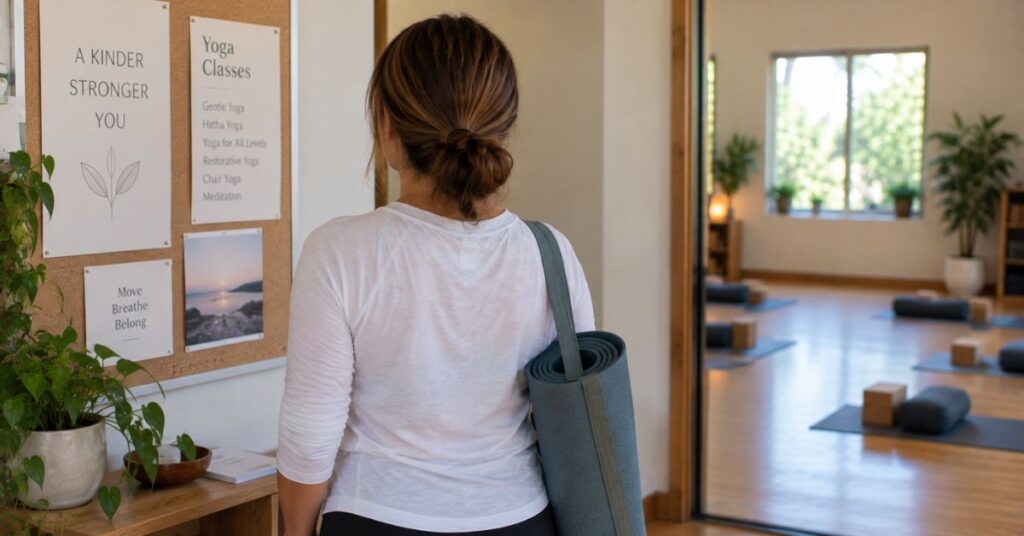
What does “meeting you where you are” actually mean?
It doesn’t necessarily mean making everything easy.
In my own teaching, for example, I offer modifications and different starting points whenever I can. But I also believe in helping people gradually build the movement skills that matter in everyday life.
Getting up and down from the floor is one of those skills.
So most of my Lifelong Yoga practices include at least some floor work, and some include weight-bearing on the hands and knees.
For many people, those movements are entirely appropriate and worth practicing. I have students with total knee replacements who comfortably practice on the floor.
But that doesn’t mean floor work is right for everyone.
If you don’t want to get down on the floor, chair yoga may be a better fit.
If you’re dealing with significant pain, an injury, a chronic condition, or more complex movement needs, you may benefit from more individualized guidance through yoga therapy or private instruction.
Sometimes meeting yourself where you are means modifying the pose.
Sometimes it means choosing a different class.
And sometimes it means getting a little more support before joining a group practice.
The goal isn’t to force yourself into the yoga that’s in front of you. It’s to find the yoga that allows you to begin.
Starting is how you become more capable
Yoga is a practice.
And that word practice matters.
You practice balance to become steadier.
You practice strength to become stronger.
You move your joints through comfortable ranges of motion to maintain and develop mobility.
You practice unfamiliar movements until they become a little more familiar.
And slowly, you build confidence in what your body can do.
So if you’ve been waiting until you’re stronger, more flexible, steadier, or somehow more “ready” before trying yoga, I hope you’ll stop moving the starting line on yourself.
Start where you are.
And if you tried yoga before and walked away thinking it wasn’t for you, consider trying again, but this time, look for a teacher and practice that feel appropriate for your body and your starting point.
You don’t have to become capable enough to start.
Starting is how you become more capable.
Ready to start?
If you’re new to yoga or coming back after a long time away, I’d love to help you begin.
My FREE 5-Day Yoga for Beginners Over 50 Challenge starts September 21.
We’ll move at a slower pace, break things down clearly, and give you a chance to experience yoga designed with your body and this stage of life in mind.