Yoga Snacks: The Science Behind Why Two Minutes of Movement Counts After 50
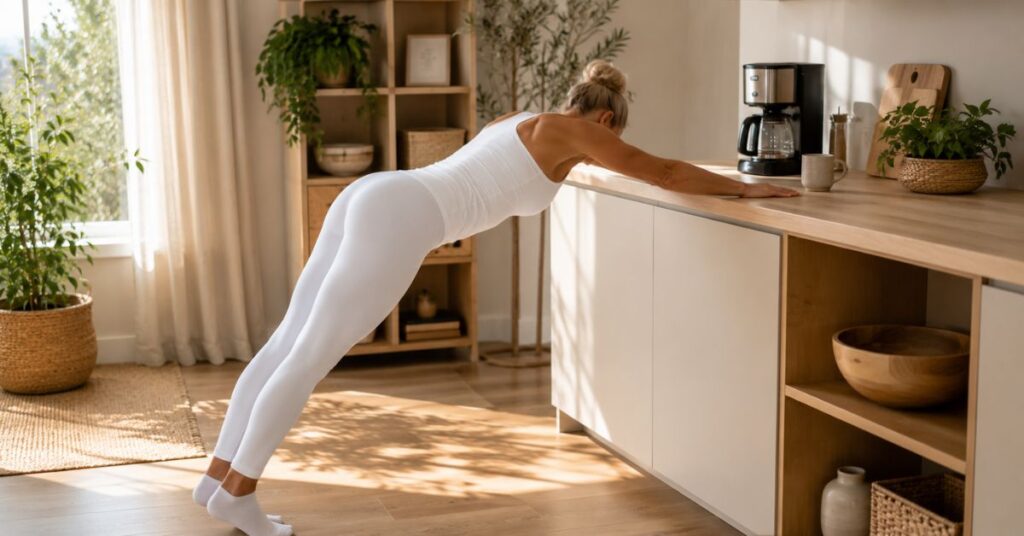
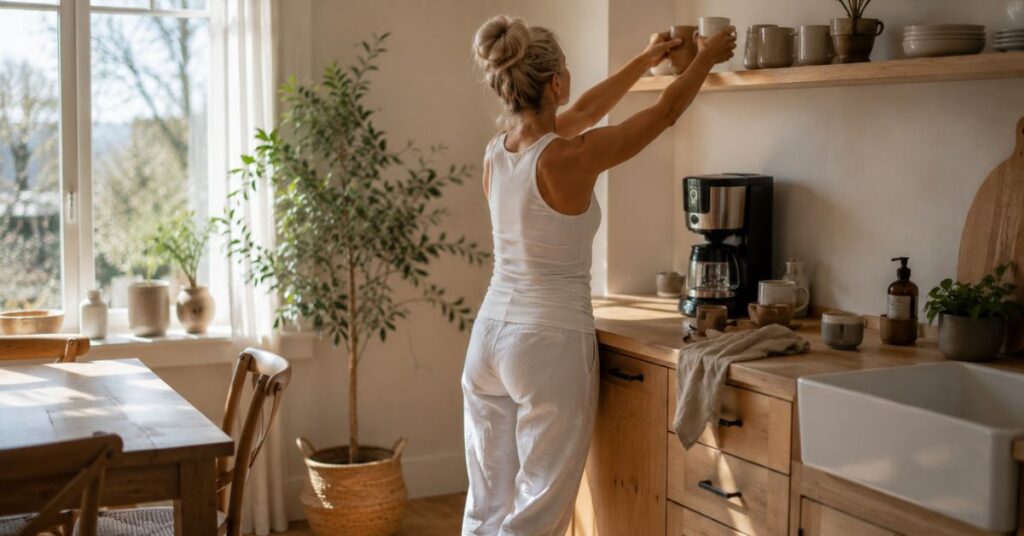
This morning, like most mornings, I stood at my kitchen counter waiting for the coffee to brew. And while I waited, I put my hands on the counter, walked my feet back, and came into a standing downward dog. Maybe forty seconds. Long enough to feel my shoulders open and my spine lengthen before the day really got going.
I didn’t roll out a mat. I didn’t change my clothes. I didn’t set aside an hour. And that little moment is exactly what I want to talk to you about, because the way most of us were taught to think about movement is costing us, every single day, in benefits we could be gathering and aren’t.
This post is adapted from Yoga for Longevity, my podcast where I share therapeutic yoga tools for healthy aging. I’m Mikah Horn, yoga therapist and founder of Lifelong Yoga Online, a membership designed especially for adults 50+. If you’re looking for a way to put the things you learn in this episode into practice, you can explore it free for 7 days, with gentle classes for joint health, healthy hips, posture, and more.
The All-or-Nothing Trap With Movement After 50
Here’s what I keep running into, with my students and with people I meet everywhere. We’ve come to believe a practice only counts if it’s the full thing. The hour-long class. The whole video. The dedicated block of time.
So when life gets full and you can’t fit that in, you do nothing at all. You tell yourself you’ll get to it tomorrow. And tomorrow looks the same.
I understand where it comes from. Most of us were taught that exercise is a separate event: you change clothes, you go somewhere, you do the thing for an hour, you come home. If you can’t do all of that, the whole thing feels off the table.
But that belief is a false choice. And I’d like to replace it with something truer. Yoga is a way of living. It’s the breath you slow down before a hard phone call. It’s the way you reach and twist and steady yourself through an ordinary day. The hour-long class is one beautiful expression of it. It was never the only one.
What Are Yoga Snacks? The Science of Short Movement Breaks
There’s a name for this in the research world now. They call them exercise snacks: short, purposeful bursts of movement spread across the day instead of one long block. The term has been around since about 2007, and it’s been studied seriously over the last decade.
A “snack” is usually defined as five minutes or less. Some of the studies use bouts as short as twenty seconds to a minute.
What the research keeps finding is that these small bits add up in ways we used to dismiss. A systematic review of exercise snacks across different populations found that for older adults in particular, these scattered bursts of movement produced real gains in lower body strength and mobility, along with improvements in mood, fatigue, and even thinking and memory.
I want to make lower body strength concrete, because it’s easy to let a phrase like that float past. Lower body strength is the ability to rise up out of a chair without using your hands. To lower down to the garden and come back up. To catch yourself when you trip instead of going down. Every time you stand up out of your chair a few extra times a day, you are training exactly that capacity.
And here’s the finding I care about most, because I watch it play out constantly: people actually stick with the short stuff. A two-minute practice is something you’ll do. The hour is the first thing to go when life gets full. Consistency is what changes a body over time, and short practices are simply more consistent.
Why Movement After Meals Helps Steady Your Blood Sugar
One of the clearest examples of a snack doing real physiological work is what happens after you eat. Your blood sugar tends to rise roughly sixty to ninety minutes after a meal.
A 2022 meta-analysis in Sports Medicine pooled seven trials and found that light walking breaks, just two to five minutes, brought post-meal blood sugar down about 17 percent compared to sitting through it. Even standing up lowered it by around 9.5 percent.
The mechanism is simple and worth understanding, because once you understand it, you’ll trust it. Your muscles run on glucose. When you contract them, especially the large muscles in your legs and hips, they pull sugar directly out of your bloodstream to burn as fuel. You get a gentler rise, a gentler fall, and less of that heavy, foggy slump that often follows a meal.
What I find genuinely remarkable is that working muscle can pull glucose out of your blood on its own, through a separate pathway that doesn’t wait on insulin. Your muscles have their own door in. That’s part of why movement is such a direct, reliable tool here.
Chair Pose, Squats, and the Big-Muscle Effect
It doesn’t have to be a walk. In a small controlled study, researchers had people do a set of simple bodyweight squats after eating, ten squats every 45 minutes across a long sitting day. The squats brought the after-meal glucose rise down about 20 percent, holding up as well as a much longer walk.
It was a small study in younger adults, so I hold the exact number loosely. But the principle underneath it is solid and it applies to all of us: a squat recruits some of the largest muscles you own, the quads and the glutes, and the more muscle you ask to work at once, the more sugar gets pulled out of circulation.
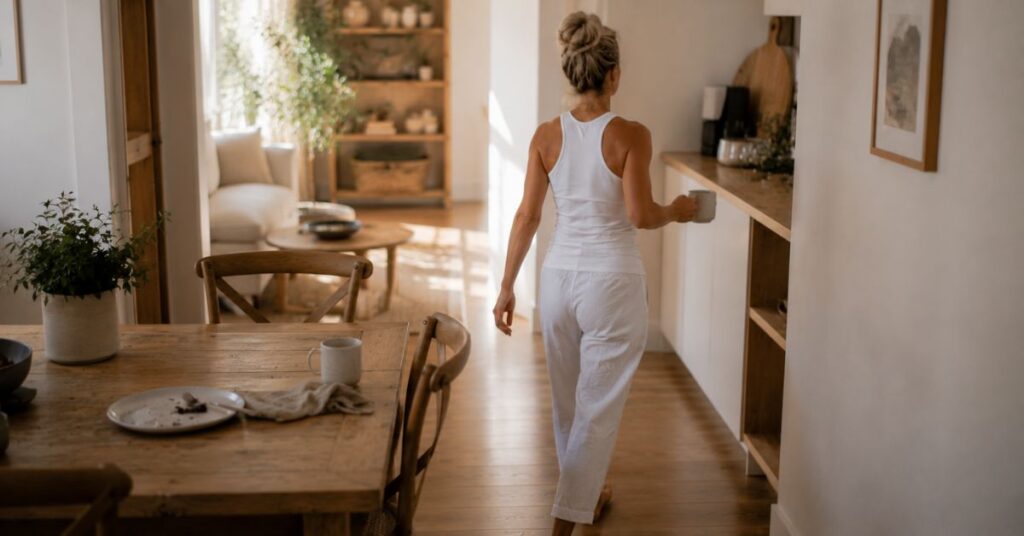
Here’s what I love about that as a yoga therapist. A chair pose, where you sink your hips back and down as though lowering into an invisible chair, is essentially that same movement. So is a wall squat, where you rest your back against the wall and slide down until your thighs engage. These are poses I already teach.
So when I’ve eaten and can’t get outside, I’ll do a few rounds of chair pose right at my kitchen counter, holding on for support if I want it. Nothing hard. Just enough to put those big muscles to work for a minute or two, and it’s doing real work for me.
Habit Stacking: Building Yoga Snacks Into a Day You Already Have
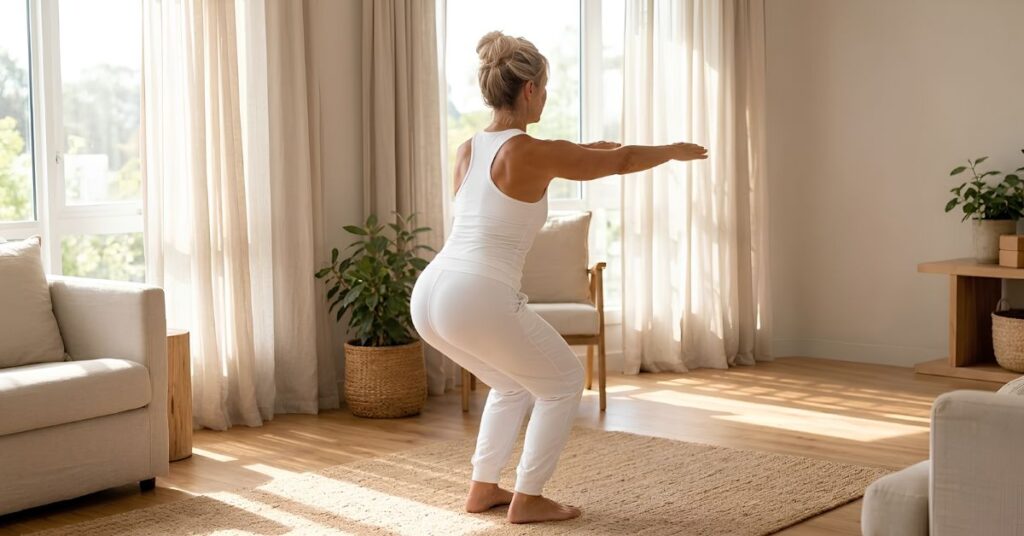
The reason these practices actually happen is that you don’t try to find new time for them. You anchor them to something you already do. You may have heard this called habit stacking, and it works because it removes the two biggest barriers: remembering, and carving out time.
A few that my students and I actually use:
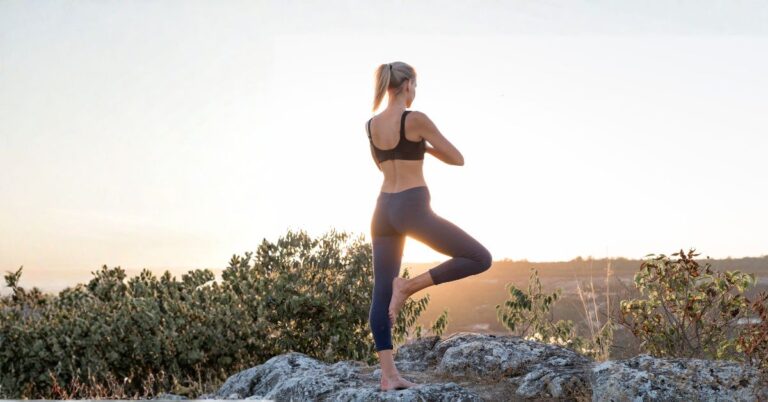
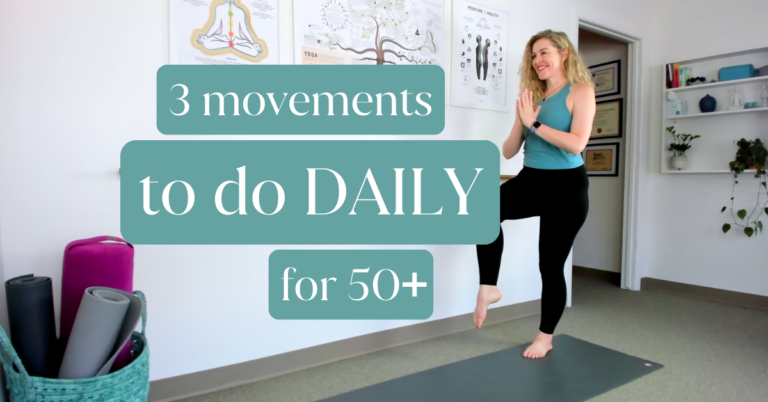
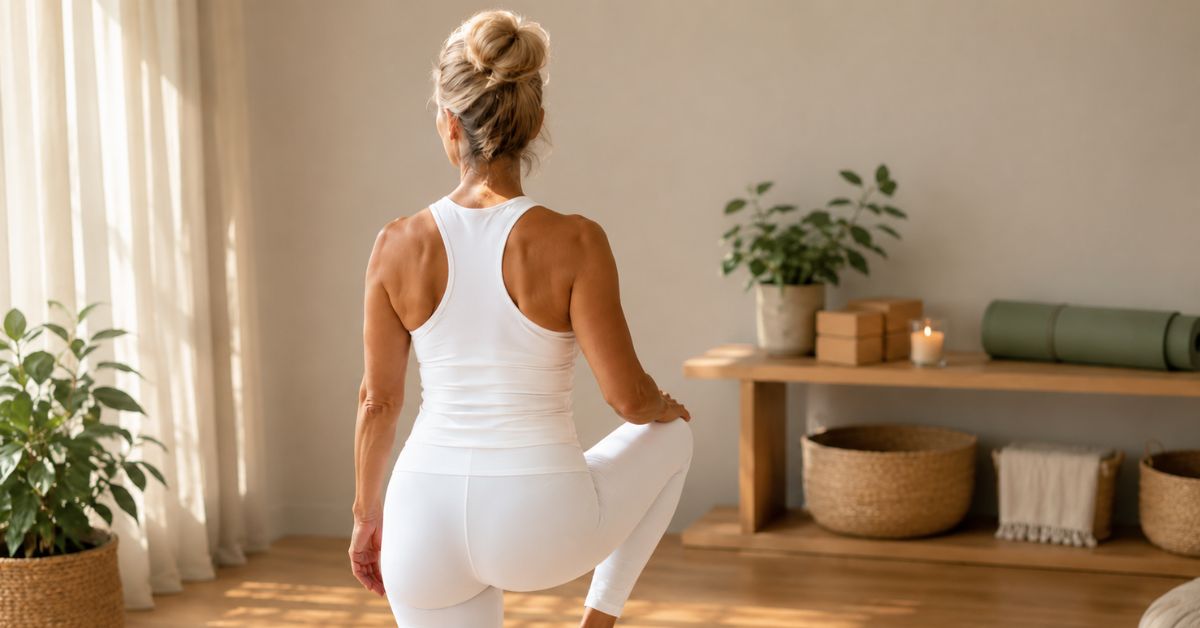
- Tree pose while you brush your teeth. Two minutes of standing balance, twice a day, that you never would have scheduled.
- A standing downward dog while the coffee brews. Shoulders and spine, first thing.
- A short moving sequence at the counter, flowing between a wide goddess squat and a tree pose, with the counter right there for support. Balance, strength, and mobility in about ninety seconds.
- A few chair poses after a meal, right where you’re already standing.
I think about one of my students, who’s seventy-four. Her microwave sits down low, close to the floor. Instead of bending over to reach it, she drops all the way into a deep squat every single time, probably a dozen times a day. She never set out to build a mobility practice. She made her kitchen work for her body. And she’s holding onto more hip and ankle mobility than a lot of people get from a class they dread and skip half the time.
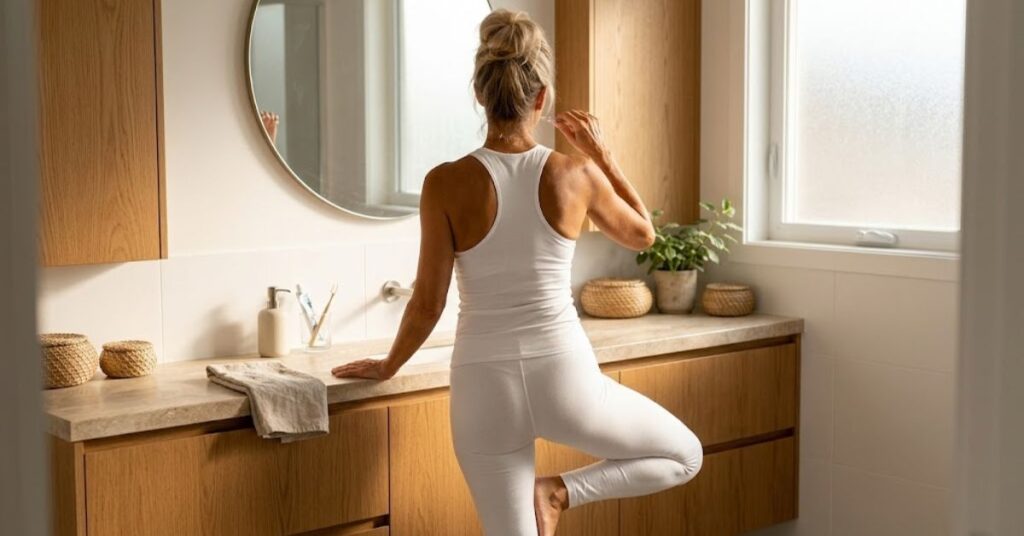
Don’t Skip the Mental Snacks: Breath and the Nervous System
Some of the most powerful snacks aren’t physical at all. They’re for your nervous system, and this is where a lot of us need the most permission to let something small count.
Slowing your breath, even for a few rounds, shifts your body toward its settled, parasympathetic state. That’s very well established. When it comes to meditation and stress hormones like cortisol, most of the strongest research uses longer programs, eight weeks, twenty minutes a sitting. But shorter practices matter too, and the real lever is consistency. A one-minute practice you actually do every day will do more for you than a thirty-minute one you keep meaning to get to.
A mental snack might be one slow breath before you pick up a hard call. Sixty seconds of noticing what you see, hear, and feel before you get out of the car. A single long exhale the moment you feel yourself start to grip.
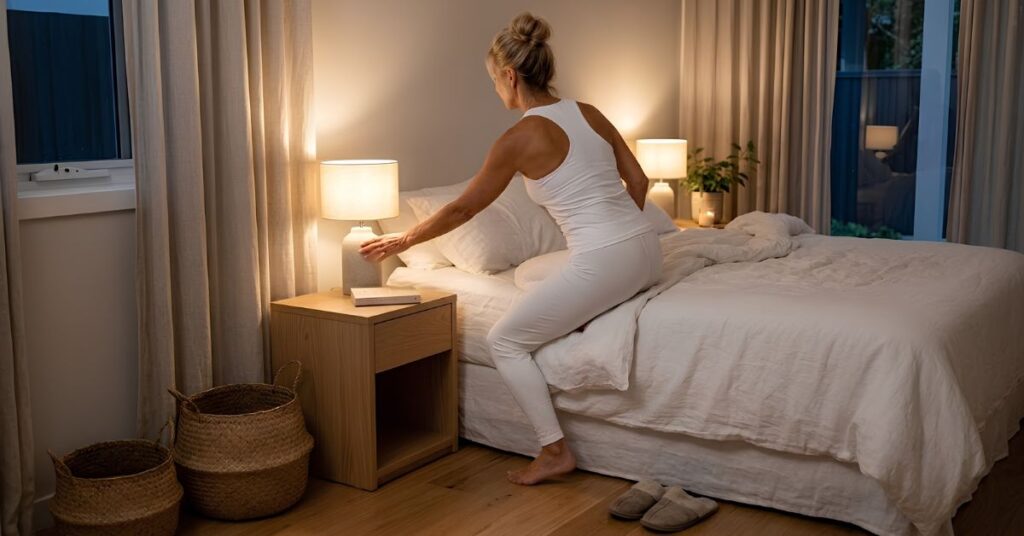
One of mine is at night. I breathe in for a count of four and out for a count of six. That longer exhale is what tips the body toward calm. And I pair it with a visualization: on each exhale, I picture every bit of tension draining out of my body, and on each inhale, I imagine breathing in calm and peace. It takes a couple of minutes, and it’s become one of my most reliable tools.
You Don’t Have to Choose Between the Full Hour and Nothing
If you take one thing from me today, let it be this. The full hour and nothing at all are not your only two options.
The two minutes at the counter counts. The extra squat counts. The one slow breath counts. They accumulate, in your strength, your balance, your blood sugar, your calm.
Your day is already full of doorways into your practice. The coffee brewing. The walk to the mailbox. The pause before the phone rings. You don’t have to add hours to your life. You just have to notice the pockets already there. And when you move through your day this way, that is yoga. You’re living it right now.
Want to build these into your day with a little guidance? That’s exactly what I focus on inside Lifelong Yoga Online, where there’s a whole Yoga Snacks section of short, do-able practices, and I’m adding more to it right now. Come try it and see how it feels to have your practice meet you where you already are.
- Try Lifelong Yoga Online, free for 7 days (including the Yoga Snacks section)
- Follow Mikah on Instagram
- Listen to the full episode of Yoga for Longevity
- Research referenced in this post: the systematic review on exercise snacks, the Sports Medicine meta-analysis on walking after meals, and the study comparing squats and walking for blood sugar