10 Things I Wish Every Beginner Knew About Yoga
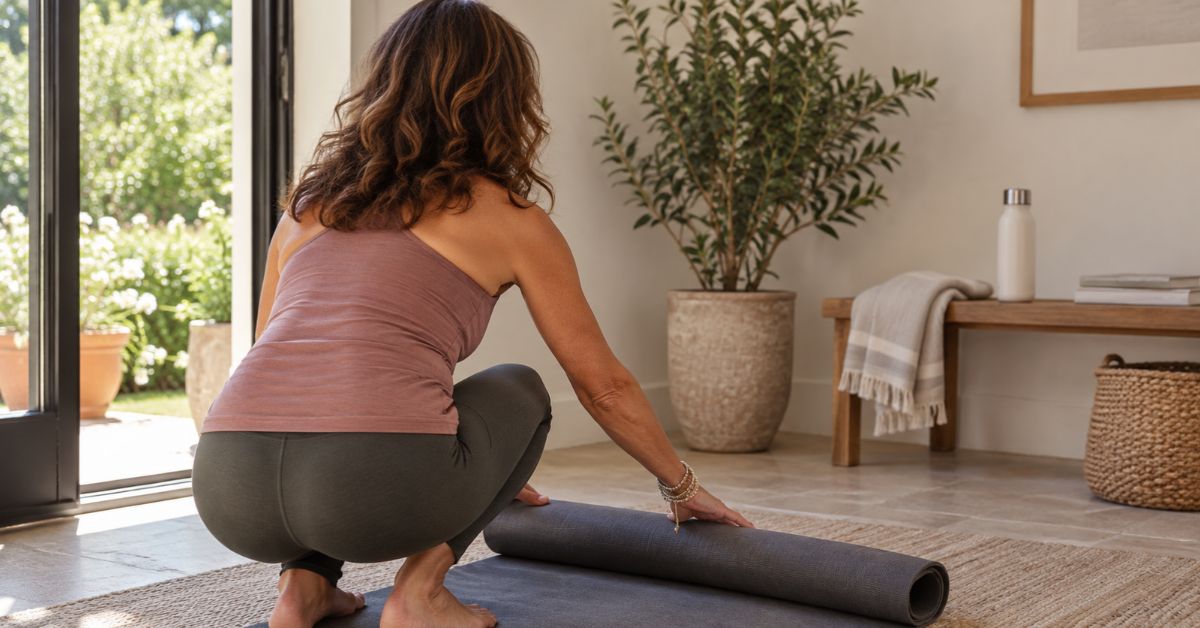
Starting yoga can feel surprisingly intimidating.
You walk into a class, or turn on a video at home, and suddenly there’s an entire language you don’t understand. Downward-Facing Dog. Vinyasa. Square your hips. Grab a block. Everyone else seems to know exactly what to do, and you’re trying to figure out which foot is your right foot.
If that sounds familiar, there’s something I want you to know: you are not supposed to know how to do yoga before you begin.
In fact, after years of practicing and teaching yoga, I’ve realized that many of the things I most want beginners to understand are things I still come back to in my own practice.
These aren’t really rules for beginners. They’re some of the things I believe most deeply about yoga.
This post is adapted from Yoga for Longevity, my podcast where I share therapeutic yoga tools for healthy aging. I’m Mikah Horn, yoga therapist and founder of Lifelong Yoga Online, a membership designed especially for adults 50+. If you’re looking for a way to put the things you learn in this episode into practice, you can explore it free for 7 days, with gentle classes for joint health, healthy hips, posture, and more.
#10: You Don’t Need to Know Anything Yet
One of the strangest things about being a beginner is feeling as though everyone else has information you somehow missed.
They know the names of the poses. They know where to put the blocks. The teacher says something and everyone moves immediately while you’re still trying to figure out what she said.
But of course you don’t know yet. You’re new.
You also may not know your own body within the practice yet. You may not know which variation feels best, when a block would be helpful, what your comfortable range of motion is, or what all the different sensations you’re experiencing mean.
Those are things you learn by practicing.
You don’t need yoga knowledge, physical mastery, or perfect body awareness before you begin. Learning those things is part of the practice.
#9: A Little Yoga Still Counts
I believe in consistency. I also believe in practicing with some frequency.
But that does not mean yoga has to become a whole production.
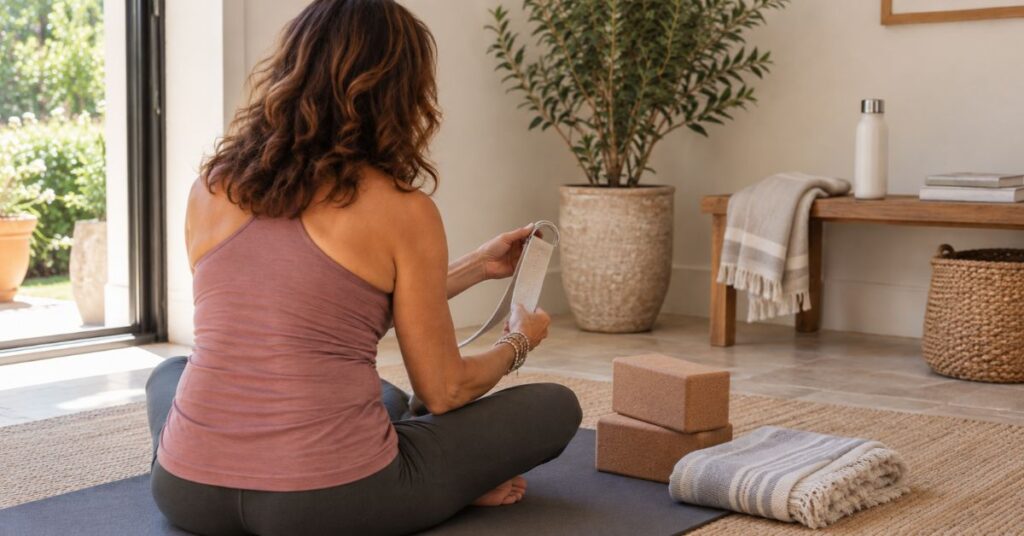
You don’t always need an hour, a complete class, the perfect yoga clothes, and an elaborate setup. Ten minutes counts. A few poses count. Getting on your mat to move and breathe for a little while counts.
And I don’t mean that as a consolation prize.
Returning to yoga frequently gives you more opportunities to learn. You begin recognizing the poses and understanding the language. You notice what helps your balance. You learn which props you like. You start noticing how your body feels today compared with yesterday.
Little by little, what once felt completely foreign becomes familiar.
Consistency doesn’t mean perfection. Life happens. You’ll miss days, and there may be seasons when you practice more or less.
But if you want to learn yoga, practice yoga.
It just doesn’t have to be elaborate to matter.
#8: Props Don’t Make Your Practice “Less Than”
I wish every beginner could let go of the idea that needing fewer props means you’re getting better at yoga.
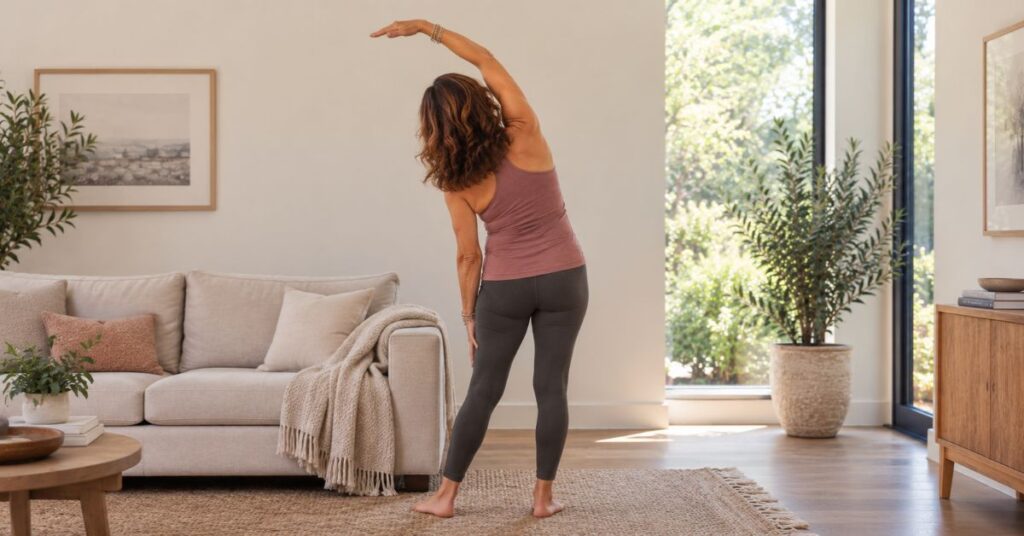
A block, strap, blanket, chair, or other support is simply a tool.
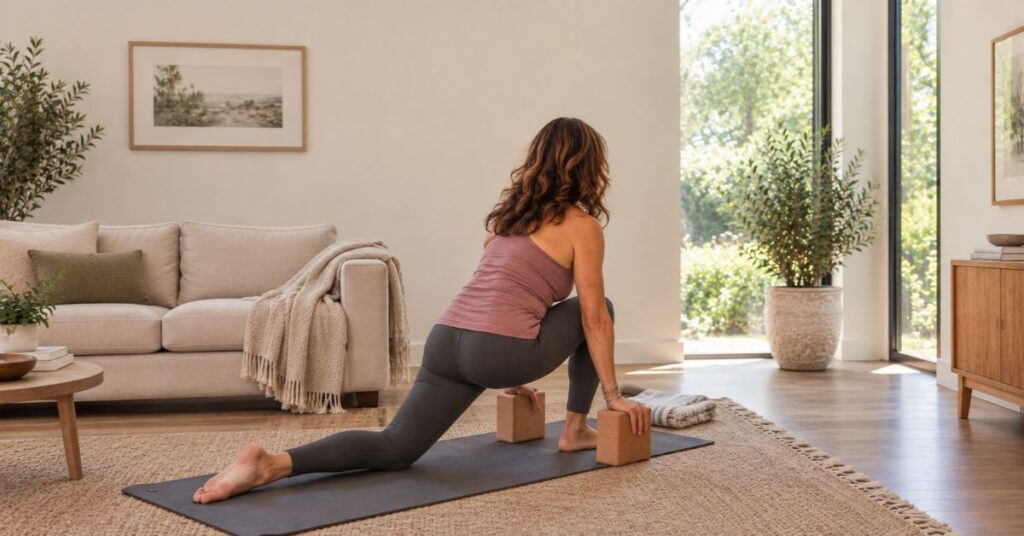
Take a low lunge. I often teach it with blocks under the hands, not because I assume someone can’t reach the floor, but because the blocks can create more space and help someone lengthen through the spine and organize the body more effectively.
I also put a blanket under my own knees in hands-and-knees all the time. I don’t have knee problems. It’s simply more comfortable.
I don’t get extra yoga points because my knees were uncomfortable.
Props aren’t training wheels you’re supposed to graduate from. Sometimes they make a pose more accessible. Sometimes they help you notice something you wouldn’t otherwise feel. They can even be used to make a pose more challenging.
A prop isn’t evidence that your body failed to do the pose. It’s one of the ways we adapt the pose to work better for your body.
#7: Nobody Is Paying Nearly as Much Attention to You as You Think They Are
It’s easy to feel self-conscious when you’re new to yoga.
You might be wondering whether everyone else can tell that you don’t know what you’re doing, whether you’re the least flexible person in the room, or whether everyone noticed that you lost your balance.
They probably didn’t.
Most people are far more focused on their own practice than they are on yours.
And even if you do wobble, go the wrong direction, or need to look around the room to figure out what’s happening — that’s okay.
You’re learning.
You don’t have to look like you already know what you’re doing while you’re in the process of figuring it out.
#6: The Teacher’s Body Is a Reference, Not the Standard
When you’re learning yoga, of course you need to look at the teacher.
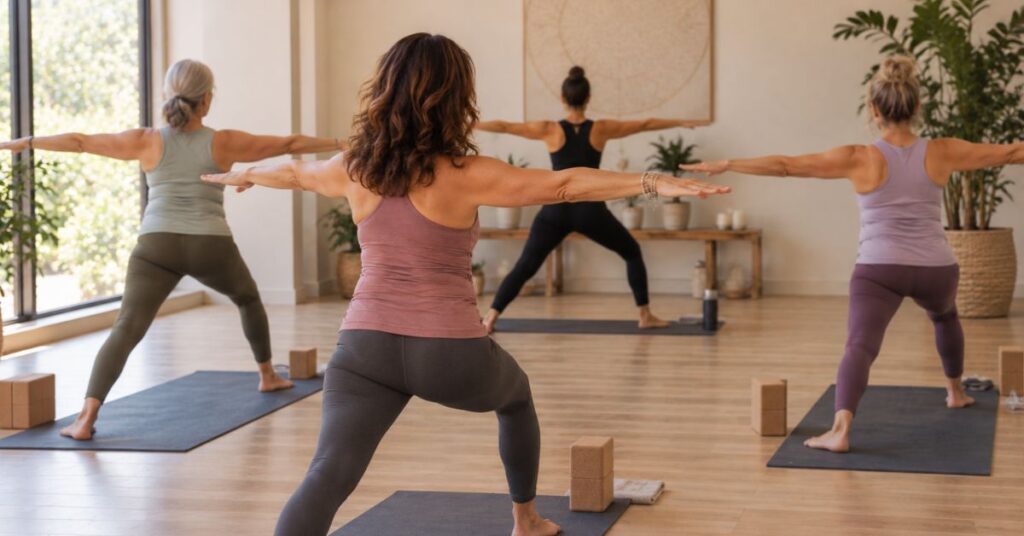
The demonstration gives you useful information. Where do your feet go? What direction are you moving? What is the general shape of the pose?
But the teacher’s body is a reference, not the standard.
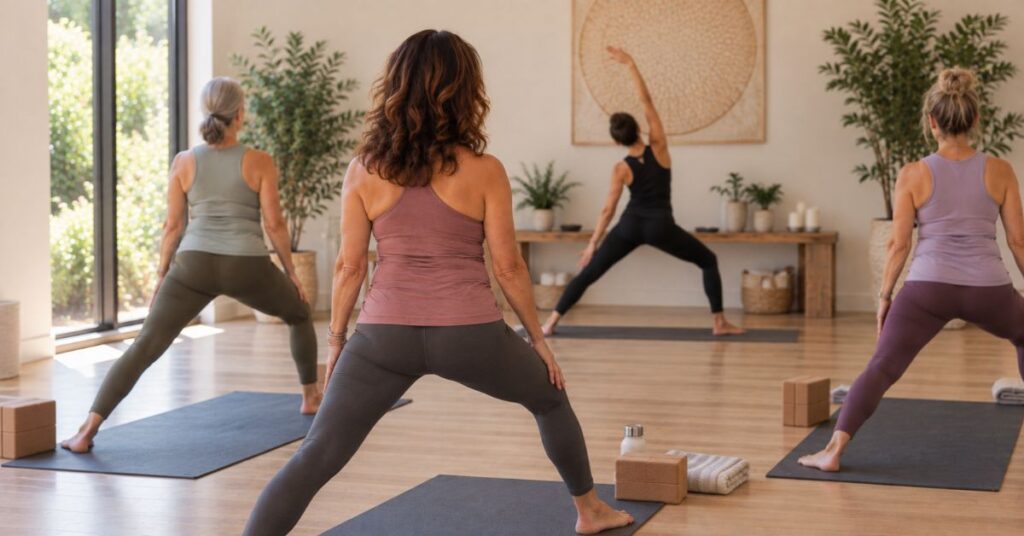
Two people can practice the same pose appropriately and look quite different doing it. One person may take a shorter stance. Another may bend a knee. Someone may use blocks. Someone else may have a completely different range of motion.
That doesn’t mean alignment doesn’t matter or that you should simply do whatever feels good. There is still an intention behind the movement.
But the goal isn’t to reproduce a photograph of someone else’s body.
Over time, you can begin asking better questions: What are we trying to strengthen? Where are we creating length? What are we stabilizing? What is the intention of this movement?
Then you can explore how your body works toward that intention.
You don’t need to make your body fit the yoga pose. The yoga pose should be adapted to fit your body.
#5: Your Practice Is Meant to Change With You
We love to imagine progress as a straight line.
You start yoga, then become steadily more flexible, stronger, and better at balancing. Everything that was hard gets easier, and you continue moving upward.
Real life doesn’t work that way, and neither does yoga.
You might feel wonderfully steady in a balance pose one day and wobble all over the place the next. You may have seasons when you feel strong and energetic, and others when you’re dealing with illness, injury, stress, or simply less time.
Your body will change as you get older, too.
The goal isn’t to somehow freeze your yoga practice while everything else in your life changes around it.
Your practice is meant to change with you.
That adaptability is part of what can make yoga a lifelong practice. I want yoga to be a companion through the changes in your life, not another standard you’re constantly trying to live up to.
#4: Ask Questions. Be Curious. Notice Things.
At first, yoga may feel like learning a series of shapes.
That’s completely normal. When you’re trying to remember where your foot goes, you probably don’t have much attention left for anything else.
But as the shapes become more familiar, something interesting can happen.
You have more room to notice.
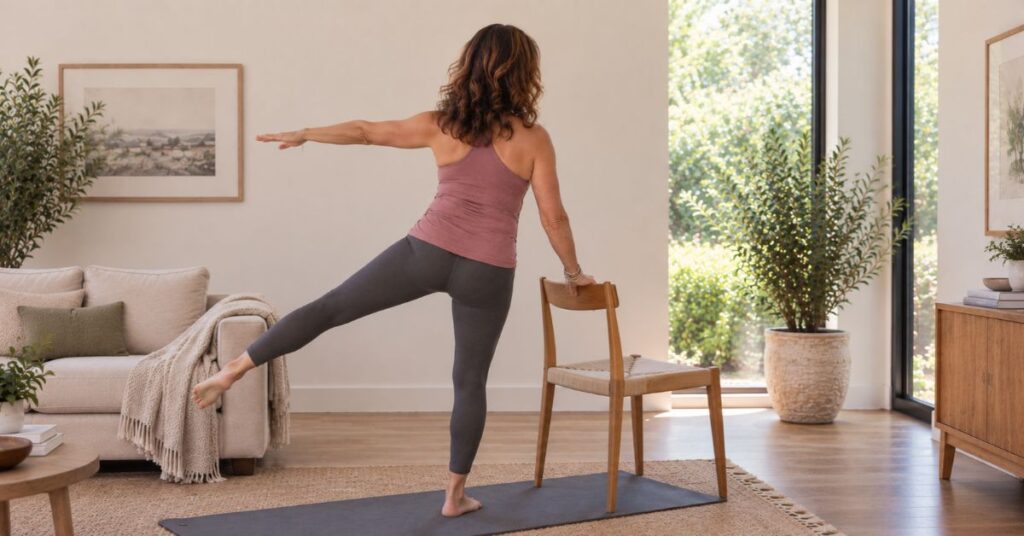
What happens if you shorten your stance? Do you feel steadier?
What happens when you slow your breathing?
Does your right side feel different from your left?
Why does your balance change when you turn your head?
This is one reason I often like spending a little longer in a pose. It gives us time to explore rather than immediately moving on.
Over time, yoga can become less about reproducing shapes and more like a conversation with your own body.
Instead of constantly asking, “Am I doing this right?” sometimes a more useful question is simply:
What am I noticing?
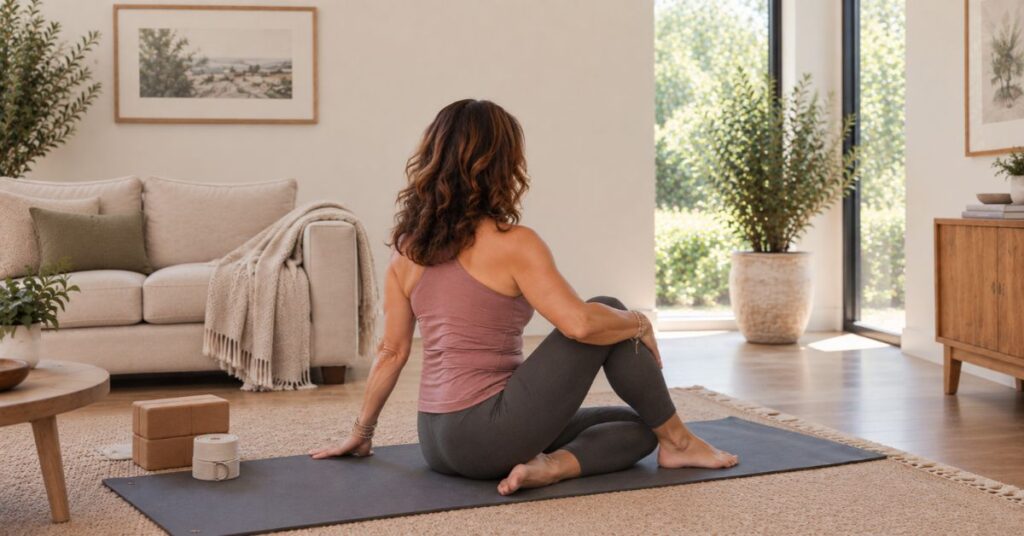
#3: You Will Probably Feel Awkward. Relish It.
There’s something kind of wonderful about being new at something.
It may not feel wonderful while you’re trying to coordinate your arms and legs and wondering why everyone else seems to know what’s happening. But being a beginner gives you an opportunity you won’t always have.
Everything is new.
You’re learning the language. You’re discovering how your body moves. You’re noticing things you may never have paid attention to before.
And yes, sometimes you’re going to feel awkward.
That doesn’t mean you’re bad at yoga. It means you’re learning.
You only get to be at the beginning once.
So rather than trying to get through that stage as quickly as possible, see if you can let yourself be there. Ask questions. Laugh when you get mixed up. Be curious about what you’re learning.
There’s no reason to pretend you’re already good at something you’ve only just begun.
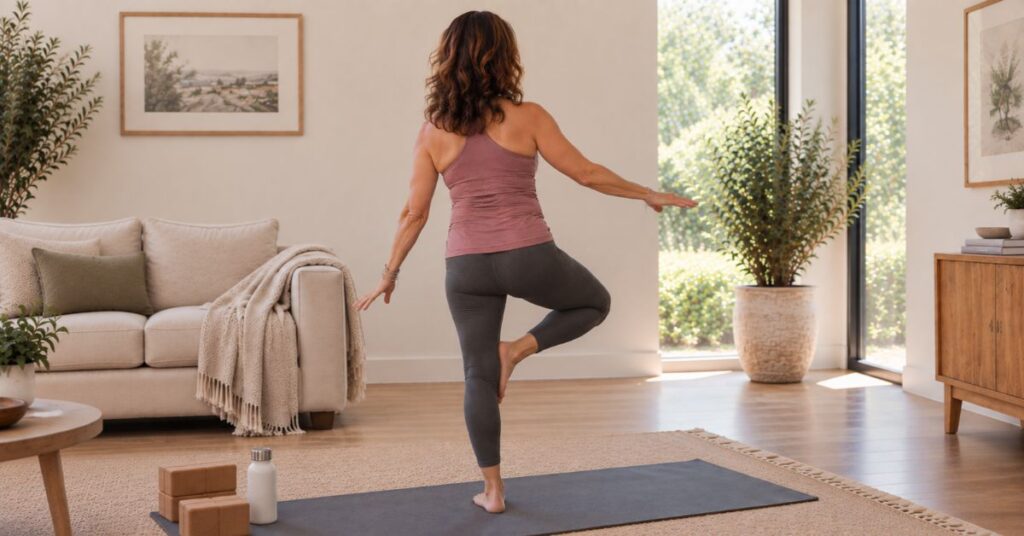
#2: Less Is More Sometimes. There Is No Prize for Doing the Hardest Version.
Yoga classes often offer choices.
Maybe you can stay in the first version of a pose, or you can take it a little farther. Maybe the teacher offers another variation after that.
It can be very tempting to assume that each new option is the better one.
But harder does not automatically mean better.
Sometimes the first version gives you exactly what you need. Sometimes taking the next option changes the pose in a way that isn’t particularly useful for your body. Sometimes you’re tired. Sometimes your balance is off. Sometimes less is simply enough.
That doesn’t mean I don’t believe in challenging yourself. I absolutely do.
But challenge should have a purpose.
The more advanced choice isn’t always the hardest choice. Sometimes the more skillful choice is knowing when less is enough.
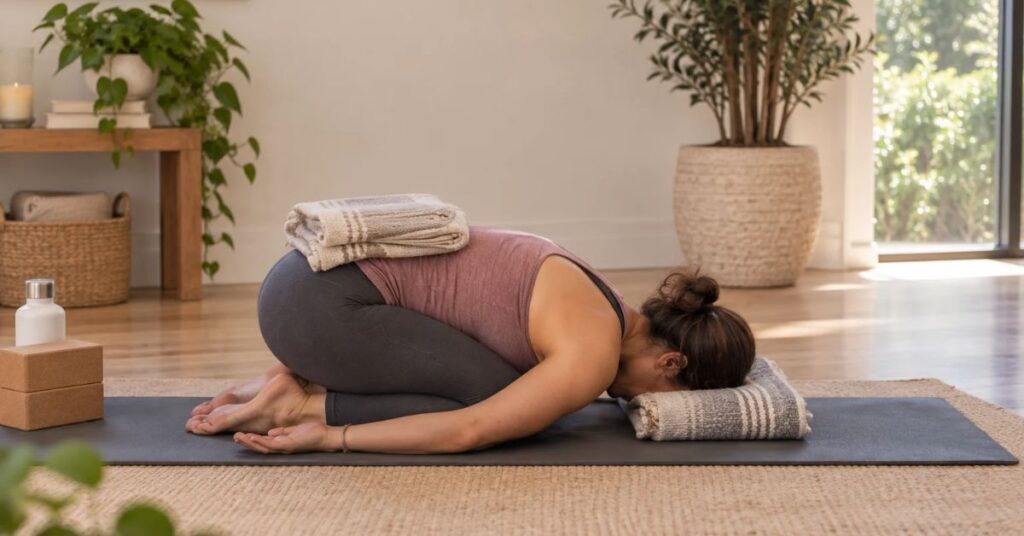
#1: You Don’t Have to Become “Good at Yoga”
This may be the biggest thing I wish beginners knew.
The physical poses were never the finish line.
That doesn’t mean the physical practice doesn’t matter. It matters deeply to me. Strength, balance, mobility, and confidence in your body can make a meaningful difference in how you move through everyday life.
But while we’re working on those things, yoga gives us the opportunity to practice something deeper, too.
We pay attention. We notice our reactions. We become curious instead of immediately judging ourselves. We learn about our bodies and, sometimes, about ourselves.
When your balance feels different today and you notice it, that’s part of the practice.
When you choose a block because it helps you experience a pose better instead of worrying about what that choice looks like, that’s part of the practice.
When you realize you’re comparing yourself to the teacher and bring your attention back to your own body, that’s part of the practice.
When you choose the first variation instead of the hardest one because that’s what works better for you today, that’s part of the practice.
Yes, you’ll learn the poses. You’ll understand the language. You’ll get to know your body better. And hopefully you’ll become stronger, steadier, and more confident.
But yoga doesn’t need to become another thing in your life that you have to achieve.
Keep practicing. Keep learning. Keep exploring.
And loosen your grip a little on what you think the result is supposed to look like.
Because you don’t graduate from yoga.
We’re not doing yoga to become better at yoga. We’re doing yoga to live better.
Ready to Begin?
If you’re new to yoga or coming back after time away, join me for the free 5-Day Yoga for Beginners Over 50 Challenge. We’ll explore mobility, strength, balance, posture, and flexibility together, with an approach designed to help you learn as you go.