Why Slowing Down in Yoga Is the Way Back Into Your Body

Many of us have absorbed the idea that if movement feels fast, intense, or challenging, it must be working. And if it feels slow or simple, maybe it doesn’t really count. That belief is everywhere in yoga and fitness culture. But for many people, especially as we age, slowing down isn’t a step backward. It’s often the first step toward actually feeling at home in the body again.
This post is adapted from Yoga for Longevity, my podcast where I share therapeutic yoga tools for healthy aging. I’m Mikah Horn, yoga therapist and founder of Lifelong Yoga Online, a membership designed especially for adults 50+. If you’re looking for a way to put the things you learn in this episode into practice, you can explore it free for 7 days, with gentle classes for joint health, healthy hips, posture, and more.
Why Faster Movement Can Pull You Out of Your Body
In many yoga spaces, faster and more challenging movement is often seen as better. Constant motion is treated like progress. But when movement is too fast, it’s easy to go on autopilot. You’re focused on keeping up, watching what comes next, or thinking ahead instead of noticing what’s actually happening inside your body.
This doesn’t start in yoga class. It’s a pattern most of us live with every day. We move from task to task, care for other people, manage schedules, and think about what’s next. Over time, that constant forward momentum pulls us out of our bodies.
When people bring that same pattern into yoga, they may be moving, but they’re still rushing. They’re trying to get through the practice instead of being in it. Slowing down interrupts that habit and creates space for awareness to return.

How Slow Yoga Rebuilds Awareness
When you move slowly, you can feel how your body enters a pose, not just what the pose looks like. You notice how weight moves through your feet. You sense whether your joints feel supported or strained. Effort, ease, and subtle adjustments become clear instead of being rushed past.
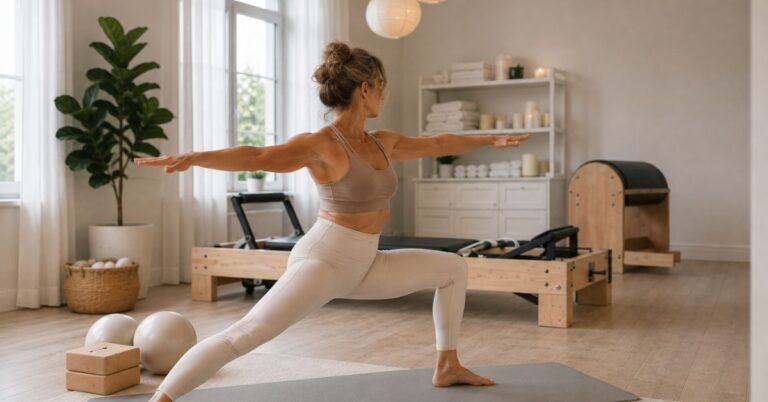
In my classes, I often cue in ways that invite curiosity. For example, in a wide stance like Warrior II, I might ask students to imagine stretching the mat apart between their feet. Then we pause and notice what muscles engage and how the breath responds. After that, we do the opposite and gently imagine wrinkling the mat up. The pose looks the same, but the inner experience changes.
This kind of exploration only works when there’s time to feel. Slow movement makes that possible.
Stillness and the Discomfort of Slowing Down
Some people find slow or gentle yoga uncomfortable, not physically, but mentally. I’ve had students tell me they thought yoga looked easy or boring. Often, those are the people who are most disconnected from their bodies.
Slowing down asks you to check in. It asks you to feel. And for someone who has spent years moving on autopilot, that can feel like a lot. But when those students stick with the practice, they’re often the ones who notice the biggest changes.
Over time, slow and mindful practice builds both inner awareness, noticing breath, tension, effort, and comfort, and outer awareness, noticing balance, stability, and where you are in space. This awareness doesn’t happen automatically. It has to be practiced, and speed often gets in the way.

Strength, Control, and Injury Prevention
There’s also a very practical benefit to slowing down. When you move slowly, you often build more strength and control than when you move quickly. Instead of relying on momentum, you’re asking the right muscles to stay engaged throughout the movement.
I often say that sometimes the slower you move, the stronger you become. Slow transitions require steady effort from start to finish, not just at the end shape.
Moving mindfully also lowers the risk of injury. When you rush, it’s easy to miss early warning signs or push past your limits without realizing it. Slowing down gives you time to notice and adjust before strain turns into pain.
How This Awareness Carries Into Daily Life
As awareness develops, something important shifts. You begin to trust your own feedback. You notice sooner when something doesn’t feel right. You make small adjustments without needing constant instruction.
This kind of listening doesn’t stay on the mat. People often notice changes in how they stand, walk, and move through their day. Movement becomes more intentional and more supportive. Yoga stops being something you do for an hour and becomes something that informs how you live in your body.

Bringing It All Together
Slowing down in yoga isn’t a step backward. For many people, it’s the way back into their body. It creates space for awareness, builds real strength, and supports long-term joint and movement health.
If you’re curious about experiencing this kind of practice, I’ve opened public registration for my six-week online Lifelong Yoga Foundation series. We meet live on Zoom with replays available, so you can move at your own pace with guidance and support.
Consistency matters more than intensity. Stay curious. Move with care.
Until next time, keep moving with intention and joy.