Are You At Risk for a Fall? (Try this Balance Test!)
Aging brings a quiet shift in how we move through the world. Things that once felt automatic… stepping off a curb, turning quickly, getting up from the floor… can start to require more attention. Balance is often the piece we don’t think about until it changes. But it plays a central role in how confident, capable, and independent we feel each day.
This post is adapted from Yoga for Longevity, my podcast where I share therapeutic yoga tools for healthy aging. I’m Mikah Horn, yoga therapist and founder of Lifelong Yoga Online, a membership designed especially for adults 50+. If you’re looking for a way to put the things you learn in this episode into practice, you can explore it free for 7 days, with gentle classes for joint health, healthy hips, posture, and more.

Balance Is About More Than Standing Still
When most people think about balance, they picture standing on one leg in a yoga pose. But balance is much more than that. It’s what allows you to move through your day with ease and confidence.
Every step you take, every time you turn your head, climb stairs, or shift your weight… your balance system is working in the background. It’s a constant conversation between your brain and your body.
As we age, this system can become less efficient. And when balance declines, the risk of falls increases. About one in four adults over 65 experiences a fall each year. And after one fall, the likelihood of another increases significantly.
A simple way to start supporting your balance is to bring awareness into everyday movements. For example, slow down slightly when transitioning from sitting to standing. Notice how your weight shifts. That awareness alone begins to retrain your system.
The Real Impact of Falls
Falls are not just minor accidents. They can have lasting consequences that affect how someone lives day to day.
In my early teaching years, I worked closely with older adults in assisted living communities. I saw firsthand how quickly things could change after a fall. Someone who was active and independent could suddenly face months of recovery… and sometimes never return to the same level of mobility.
Statistics help paint the bigger picture. Each year, millions of older adults end up in emergency rooms due to falls, and many are hospitalized. Hip fractures are especially serious, with significant impacts on long-term health and independence.
And for those with osteopenia or osteoporosis, the risks are even higher because the bones are more vulnerable.
This isn’t meant to create fear… but awareness. Because balance is something we can work on. And that changes the conversation entirely.
One simple practice is to build strength alongside balance. Even gentle exercises like supported squats or stepping movements can improve stability over time.

A Simple Balance Test You Can Try Today
One of the most empowering things about balance is that it can be measured… and improved.
Here’s a quick test you can try:
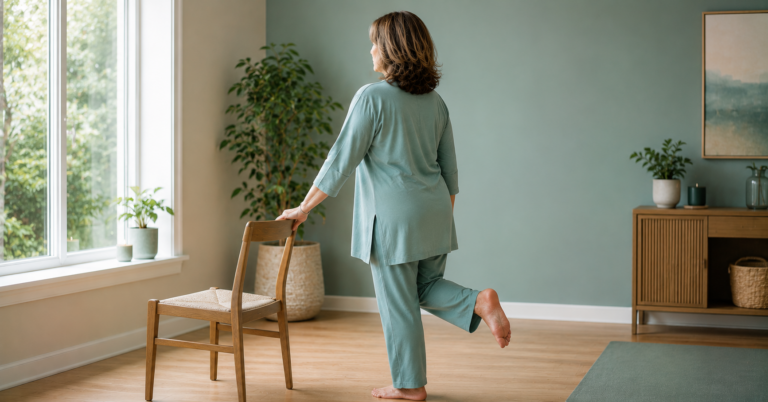
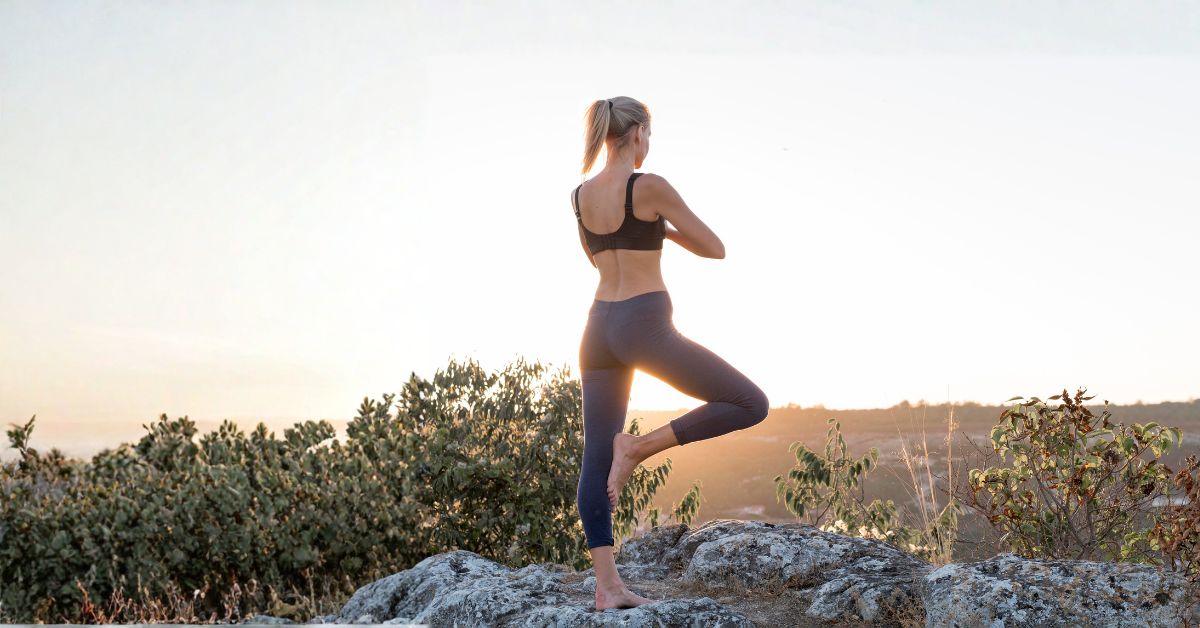
Stand near something sturdy like a wall or chair. Lift one foot off the ground and see how long you can balance without holding on.
That’s it.
This simple test gives useful insight:
- Less than 5 seconds may indicate a higher fall risk
- Less than 10 seconds has been linked to increased health risks over time
Wherever you land, take it as information… not judgment.
If it feels challenging, that’s simply a sign your body is asking for more support in this area.
A practical way to build balance into your routine is to pair it with habits you already have. Try standing on one leg while brushing your teeth. Over time, small consistent efforts like this can lead to meaningful improvements.
Want video guidance? I can send you a video with me walking you through the test. Sign up to receive it below:

Bringing It All Together
Balance shapes how we move, how we feel, and how independently we live. It’s not just a skill for yoga practice… it’s a foundation for daily life.
The good news is that balance responds quickly to consistent, gentle practice. You don’t need to push hard. You just need to stay steady and attentive.
If balance is something you want to improve, start small. Stay consistent. Let your body adapt over time.
And if you’re ready for more guided support, you can explore Lifelong Yoga Online free for 7 days. It’s designed to help you build strength, stability, and confidence in a way that meets you where you are.
Until next time, keep moving with intention and joy.
Connect with Mikah
Try 7 Days Free in Lifelong Yoga Online
Work with Mikah 1:1: Private Yoga Therapy
Instagram: @lifelong.yoga
Facebook: Lifelong Yoga with Mikah