Why Balance Changes As We Age (And What You Can Do About It)
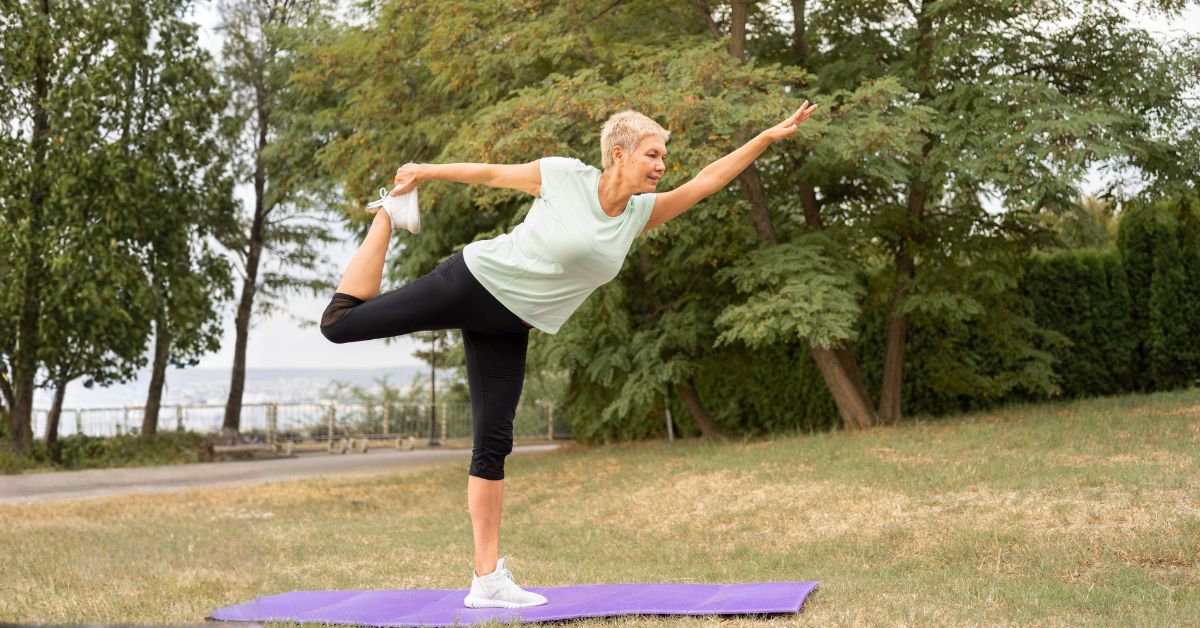
Aging brings wisdom we would not trade… but it can also bring subtle changes in the body that catch us by surprise. Maybe you notice a small wobble while putting on your pants. Maybe stepping off a curb feels a little less steady than it used to. These moments can feel unsettling, but they are also incredibly common.
What many people do not realize is that balance is not just something we either have or lose. Balance is a skill. And like any skill, it can be practiced and improved when we understand how it works.
This post is adapted from Yoga for Longevity, my podcast where I share therapeutic yoga tools for healthy aging. I’m Mikah Horn, yoga therapist and founder of Lifelong Yoga Online, a membership designed especially for adults 50+. If you’re looking for a way to put the things you learn in this episode into practice, you can explore it free for 7 days, with gentle classes for joint health, healthy hips, posture, and more.
Balance Is More Than Strength
When people think about balance, they often assume it is mostly about strong legs or a strong core. Strength and mobility absolutely matter. Your body needs the ability to respond when your weight shifts. Ankles must adjust, hips must move, and muscles must engage quickly enough to steady you.
But balance is actually guided by three key systems in the body that constantly communicate with the brain.
I like to call them the see, hear, and feel systems.
Your vision, your vestibular system in the inner ear, and your proprioception all work together to tell your brain where your body is in space. When one of these systems becomes less reliable, balance can feel more challenging.
The encouraging part is that these systems respond to practice.
Let’s look at each one.

Vision: Your Brain’s Visual Map of the World
Your eyes are constantly giving your brain information about your surroundings. They help you recognize where the ground is, where a curb begins, or whether your body is upright or leaning.
You can feel how important vision is with a simple experiment.
Stand with your feet close together or in a heel-to-toe stance. Then gently close your eyes. Most people immediately notice how much harder it is to stay steady.
When vision is removed, the brain suddenly has less information to rely on.
As we age, vision can change in subtle ways. Depth perception may become less precise. Contrast can become harder to see. It may also take longer for the eyes to adjust between bright and dim lighting.
These changes can make things like uneven sidewalks, shadows, or poorly lit steps harder for the brain to interpret quickly.
Practice tip:
When practicing balance poses in yoga, occasionally try them with your gaze soft or briefly closing your eyes while standing near support. This gently trains the body to rely on the other balance systems as well.
The Vestibular System: Your Inner Sense of Orientation
The vestibular system lives in the inner ear. It is responsible for sensing head movement and orientation.
This system tells your brain whether you are upright, tilting, turning, speeding up, or slowing down.
Inside the inner ear are tiny sensory structures that detect movement and send signals to the brain. Over time, some of these sensory cells naturally decline. The communication between the inner ear and the brain may also become slightly slower.
You might notice this when turning your head quickly or changing direction. The body may take a moment longer to register where it is in space.
Practice tip:
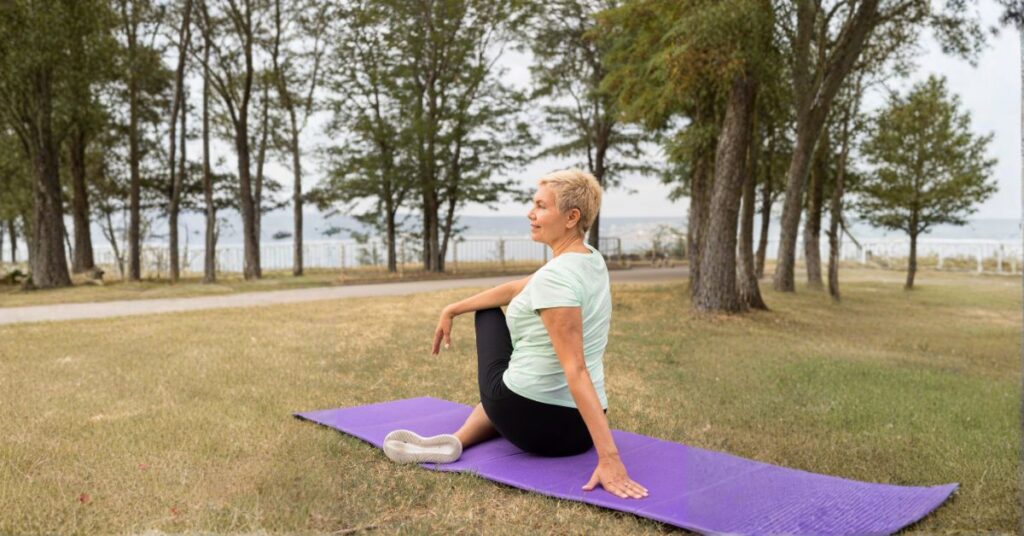
Gentle movements that involve turning the head or shifting your gaze during yoga can help stimulate this system. Slow, mindful movement gives the brain a chance to practice processing these signals again.
Proprioception: Your Body’s Internal GPS
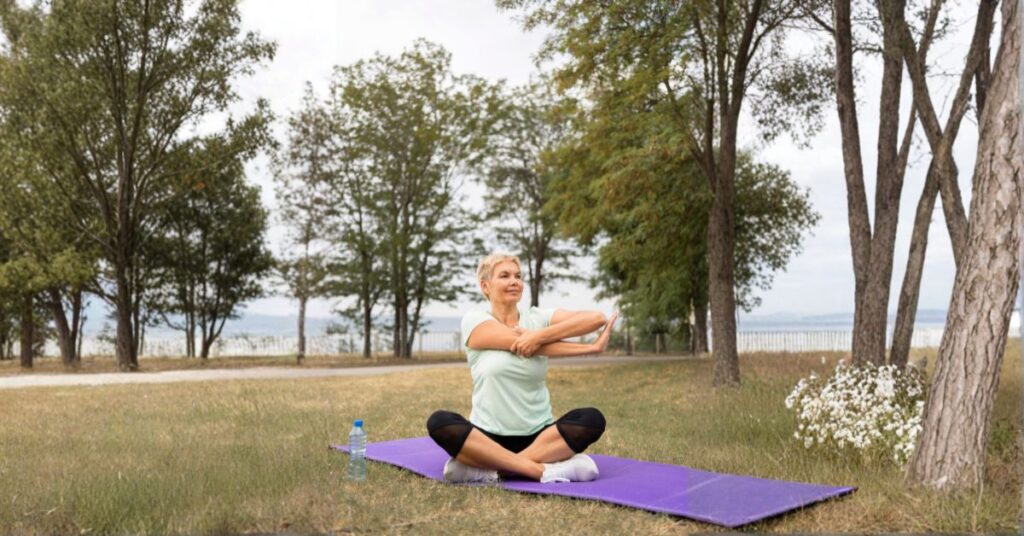
Proprioception is your body’s ability to sense where it is in space.
It is the reason you can touch your nose with your eyes closed or know where your foot is without looking down.
Your muscles, joints, and connective tissues contain sensory receptors that constantly send information to the brain about pressure, movement, and position. This feedback allows the brain to make tiny adjustments all day long to keep you upright.
But these receptors thrive on use.
If we spend long periods sitting or stop doing movements that challenge balance, the brain simply receives less information from the body. With less input, it becomes harder to make those subtle stabilizing adjustments.
Yoga is particularly powerful for improving proprioception because it encourages slower, more mindful movement.
For example, in Warrior II, many students are surprised to discover that the arm they are not looking at is slowly drifting downward. The body believed it was level… but awareness reveals something different.
Practice tip:
Pause occasionally during poses to notice how your feet connect to the floor and how your weight shifts forward, back, or side to side. This awareness strengthens proprioception over time.
Bringing It All Together
Balance is not just about standing on one leg. It is the result of several systems working together… vision, the inner ear, and your body’s internal sense of position.
Strength and mobility support these systems. Awareness refines them.
And the good news is that balance can improve at any age. A small wobble is not a failure. It is simply information from your body that a skill needs a little attention.
Consistency matters far more than intensity. Gentle, regular movement helps your body stay responsive and resilient.
In the next episode, we will talk about why balance becomes such an important part of healthy aging… and I will share a simple balance test you can try at home to see where you stand.
Until next time, keep moving with intention and joy.
Connect with Mikah
Try 7 Days Free in Lifelong Yoga Online
Work with Mikah 1:1: Private Yoga Therapy
Instagram: @lifelong.yoga
Facebook: Lifelong Yoga with Mikah