Yoga to Improve a Hunched Back (Hyperkyphosis)

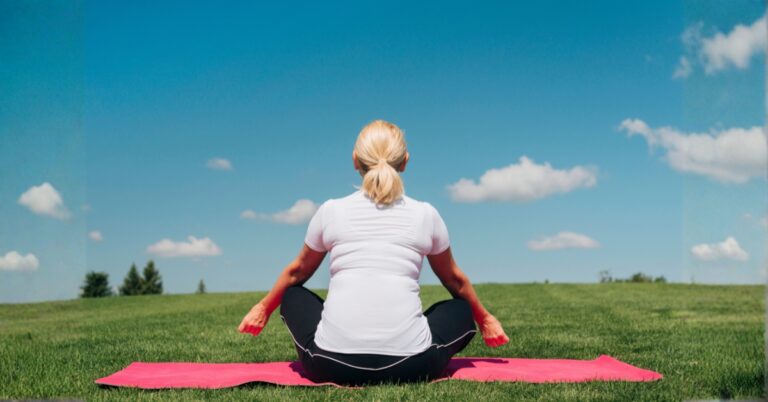
Aging brings wisdom we wouldn’t trade… but it also brings changes to the body that can feel frustrating or unfamiliar. Maybe you’ve noticed yourself feeling more rounded forward. Maybe your shoulders feel tighter, your neck more strained, or your balance a little less steady. These shifts often happen gradually, which is why many people don’t notice them until they’ve become more significant.
The good news is that posture is not just about “standing up straight.” Your body adapts to what you practice. And with the right kind of movement, awareness, and strength, there is so much we can do to support a more resilient, upright body as we age.
This post is adapted from Yoga for Longevity, my podcast where I share therapeutic yoga tools for healthy aging. I’m Mikah Horn, yoga therapist and founder of Lifelong Yoga Online, a membership designed especially for adults 50+. If you’re looking for a way to put the things you learn in this episode into practice, you can explore it free for 7 days, with gentle classes for joint health, healthy hips, posture, and more.
What Is Hyperkyphosis… And Why Does It Matter?
A natural curve through the upper back is completely normal. Our spine is meant to have gentle curves. But when that upper back rounding becomes excessive over time, it’s called hyperkyphosis.
You may hear people describe it as a “hump” or rounded upper back posture. While many people first notice it because of appearance changes, hyperkyphosis affects much more than how we look.
As the upper body rounds forward, the body’s center of gravity shifts too. This can affect balance, stability, and walking mechanics. The head often drifts farther forward as well, placing extra strain on the neck and upper back muscles. Over time, this can contribute to neck tension, headaches, shoulder discomfort, stiffness, and fatigue.
Posture also influences breathing. When the chest collapses and the rib cage becomes less mobile, breathing often becomes shallower without us realizing it.
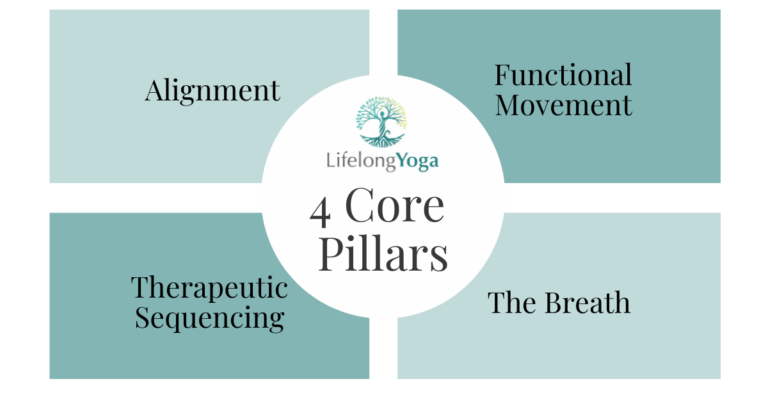
This is why posture is one of my five pillars of movement longevity. Everything in the body is connected. Changes in one area ripple through the entire system.
One simple practice tip… start noticing how often you spend time in one position throughout the day. Long stretches of sitting, driving, computer work, or looking down at phones all reinforce forward-rounded patterns over time.

Your Body Adapts to Repeated Patterns
One of the biggest contributors to hyperkyphosis is repetitive positioning combined with lack of movement variability.
The body likes options. It likes changing directions, changing positions, and moving through different ranges of motion. But many of us spend years in the same forward-facing positions. Over time, the body adapts to those patterns.
This can lead to muscle imbalances too. The muscles across the chest and front shoulders often become tighter and more dominant, while the muscles along the upper back and around the shoulder blades become weaker and less active.
Eventually, the body starts collapsing into the path of least resistance.
This is one reason I focus so much on movement variety in my classes. We need to regularly remind the body that it can still rotate, side bend, extend, balance, and move in multiple directions.
One of the most important concepts I teach is the seven movements of the spine:
- Side bending
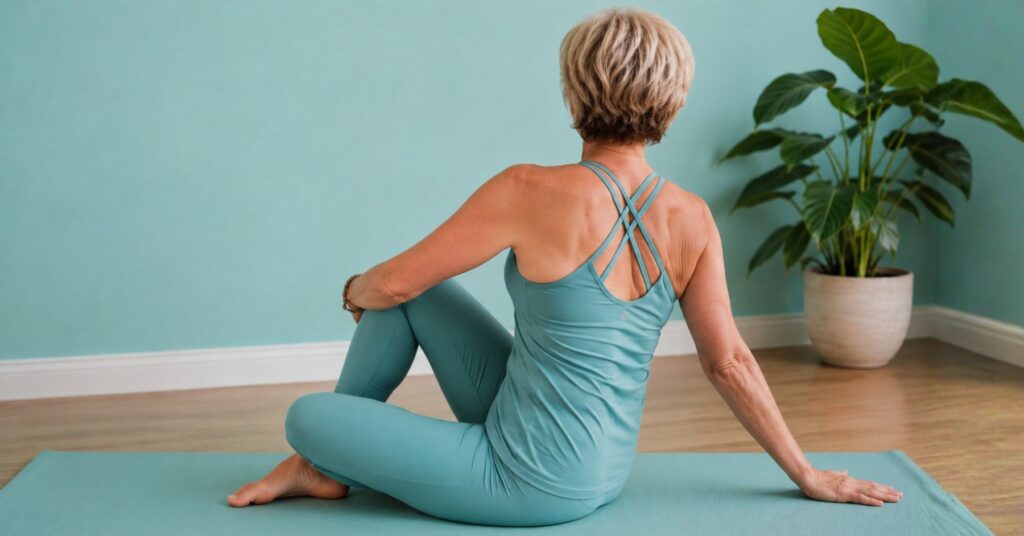
- Rotation
- Flexion
- Extension
- Axial extension
As we age, extension becomes especially important because we already spend so much of life in flexion… rounded forward.
Practices like gentle backbending, chest opening, balancing work, and spinal decompression can help restore awareness and mobility that often gets lost over time.
A great example is downward-facing dog, where you press into the hands and lengthen through the spine to create more space and decompression through the body.
Bone Health Matters Too
Sometimes hyperkyphosis is not purely muscular or postural. Structural changes in the spine can also play a role.
With osteoporosis, bones become less dense and more fragile over time. Small spinal compression fractures can occur in the vertebrae, especially through the thoracic spine. Sometimes these fractures are painful… and sometimes people don’t realize they’ve happened at all.
They may simply notice increasing rounding through the upper back or gradual height loss.
This is why posture conversations need nuance. Sometimes someone is not simply “slouching.” There may be real structural changes occurring in the spine.
This is also why bone-safe movement becomes so important as we age.
In Lifelong Yoga, all of my classes are taught through a bone-mindful lens. I care deeply about helping people move safely while still building strength, confidence, and mobility.
I’m also currently creating a mini-course called Strong Bones Safe Yoga, designed specifically for those with osteoporosis or osteopenia. It will cover which poses to avoid, which to modify, and how to practice yoga safely to protect the spine while still receiving all the benefits of movement.
If you are over 55 and haven’t had a recent DEXA scan, it may be worth talking with your doctor about getting a baseline assessment of your bone density.
Strengthening the Back Body Changes Everything
One of the most powerful ways to support better posture is by strengthening the muscles along the back body.
Many people lose awareness of these muscles over time. The spinal extensors, upper back muscles, and muscles around the shoulder blades become weaker simply because we stop using them consistently.
Part of posture work is reconnecting to those muscles again.
Some of my favorite yoga practices for this include:
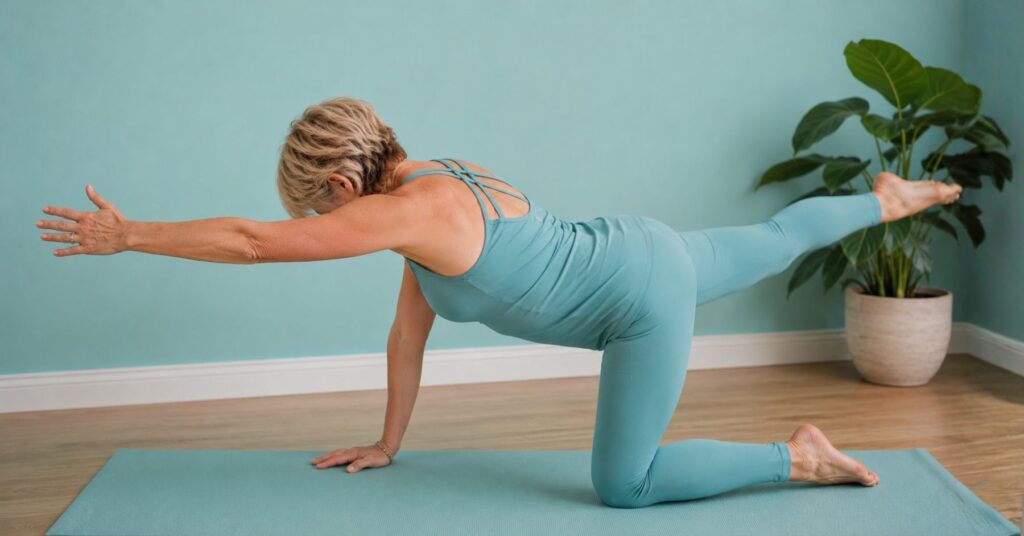
- Bird Dog (balancing table)
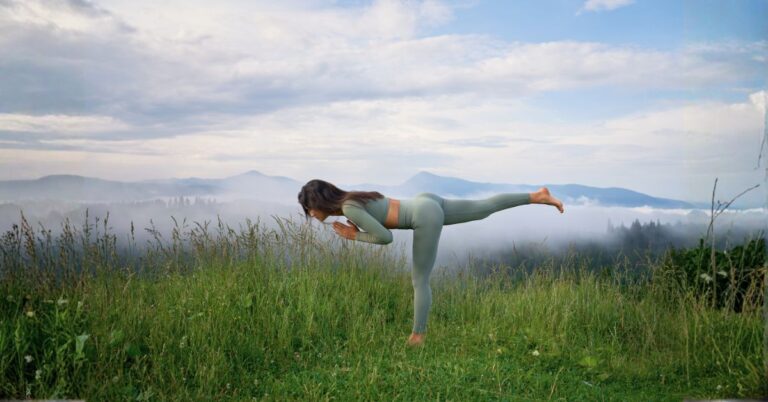
- Airplane pose variations
- Cobra pose
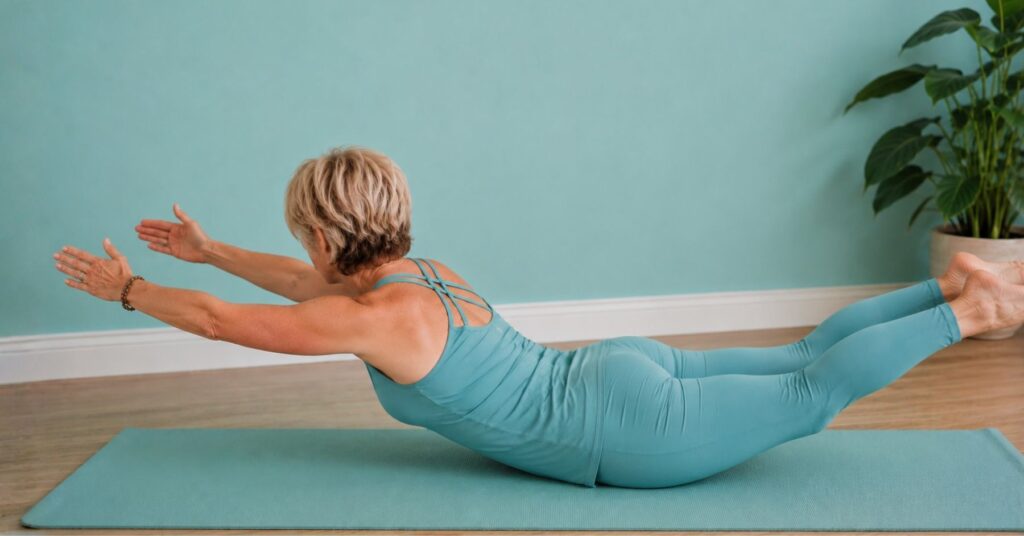
- Locust pose
Locust pose is especially effective because gravity gives immediate feedback. As you lift the chest and legs away from the floor, the muscles along the back body have to activate and support you.
At the same time, we also want to open through the front of the body… especially the chest, pecs, and shoulders, which often become tight from years of forward positioning.
Posture is never about rigidly forcing yourself to “sit up straight.” That usually creates more tension.
Instead, we want to create a body that naturally supports more upright, resilient movement.
Bringing It All Together
Hyperkyphosis is incredibly common as we age… but common does not mean inevitable. And it certainly does not mean there’s nothing we can do.
The body responds to consistent, supportive movement. Small daily practices really do add up over time.
Start by adding a little more movement variability into your day. Open through the chest. Strengthen the back body. Pay attention to your breathing. Change positions more often. Give your body more options.
Consistency matters far more than perfection.
And if posture is something you’ve been wanting support with, I’d love to practice with you inside Lifelong Yoga Online. The membership includes guided classes built around the movement longevity pillars so you can simply press play and move with confidence.
Until next time, keep moving with intention and joy.
Connect with Mikah
Try 7 Days Free in Lifelong Yoga Online
Work with Mikah 1:1: Private Yoga Therapy
Instagram: @lifelong.yoga
Facebook: Lifelong Yoga with Mikah