How’s Your Balance, Really? Try This Simple Test at Home
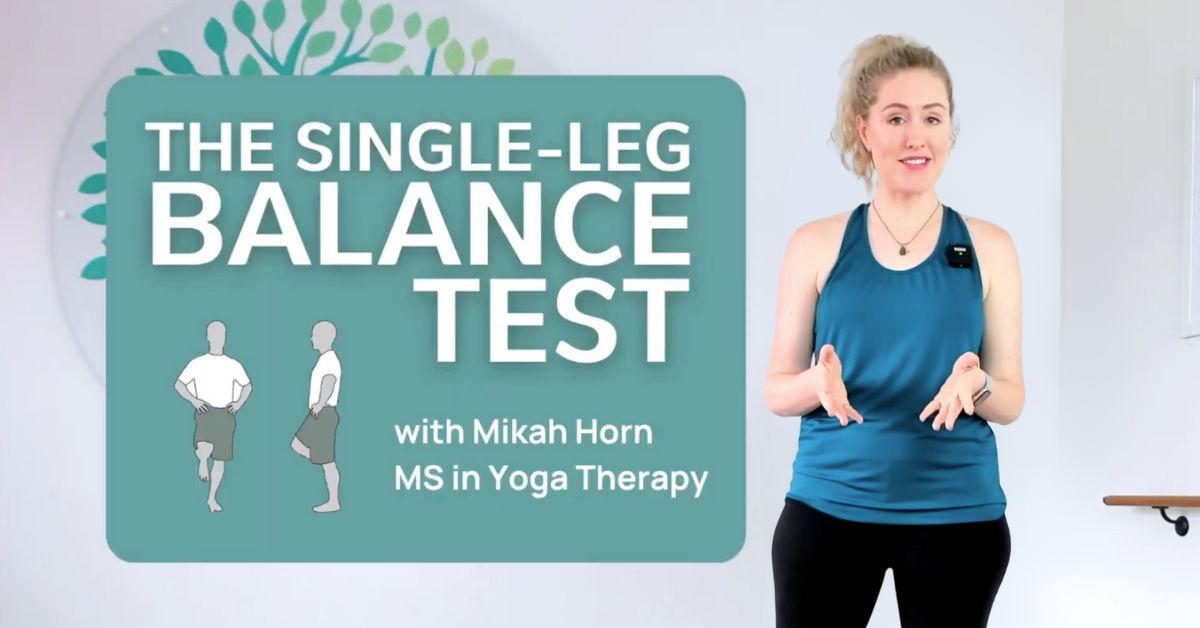
Have you ever wondered how your balance compares to others your age? Or more importantly, if you’re at risk for a fall?
Balance isn’t just about staying upright. It’s a reflection of your strength, coordination, nervous system function, and even your longevity.
Today, I want to walk you through a simple but powerful test you can do at home in under five minutes. You’ll get a clear picture of where your balance stands right now, you’ll find out if you’re at risk for a fall, and you’ll learn how to track your progress over time.
Why balance matters (more than you think)
Being able to balance on one leg might not sound like a big deal, but it is.
Not only does it help prevent falls, but studies also show that people who can’t stand on one leg for at least 10 seconds are at nearly double the risk of death from any cause in the next 10 years.
That’s a stat worth paying attention to.
But the good news? Balance is something you can absolutely improve with consistent practice.
Step-by-step: Try the Single-Leg Balance Test
Before you begin: Take off your shoes if you can (barefoot is best). Stand near a wall or counter for safety.
Step 1: Stand tall
- Stand with your feet hip-width apart
- Bring your hands to your hips or let them rest gently by your sides
Step 2: Lift one leg
- Gently lift one knee up in front of you (hip height or wherever feels steady)
- Start your timer the moment your foot lifts
Step 3: Hold
- Keep your gaze steady and breathe
- Stop the timer when:
- Your lifted foot touches the floor
- You grab hold of something
- You lose your balance
Step 4: Record your time
- Jot down your time for each leg
- Repeat up to 3 times per leg and take your best score
Bonus challenge: Try it with your eyes closed!
Feeling adventurous? Try the test again, this time with your eyes closed.
Even a few seconds is an accomplishment! Without visual input, your inner ear (vestibular) and proprioceptive systems have to work harder, which makes this a powerful training tool.

What do your results mean?
- Under 5 seconds: This may indicate a higher risk of falls. Now is a great time to prioritize balance work.
- Under 10 seconds: Studies suggest this could be linked to greater risk of health complications over time.
- Over 10 seconds: That’s a solid start! But don’t stop here—your goal is progress, not perfection.
If you want to compare yourself to others in your age group, sign up for the free Test Your Balance Toolkit here and I’ll email you the normative values (age comparison) chart and a printable log to track your improvement over time.
But I do encourage you not to stress about the exact numbers. Instead, focus on gradually improving your own time month to month. Balance is a skill, and like any skill, it gets better with practice.
Why yoga is so effective for balance
Yoga isn’t just about stretching or becoming more flexible, it’s one of the most well-rounded tools we have for improving balance at every level. Here’s how it helps:
Yoga helps strengthen your legs and core
Many yoga poses naturally target the muscles that keep you upright and steady—like your ankles, hips, thighs, and abdominal muscles. These are your body’s stabilizers.
When you strengthen them in a mindful, low-impact way, you’re more prepared for real-life balance challenges—like stepping off a curb or catching yourself when you trip over a dog toy. (Just me?)

Yoga improves body awareness and coordination
Yoga invites you to move with intention. Instead of powering through, you’re paying attention to how you move—how your weight shifts, where your foot lands, how your breath changes. This builds proprioception, which is your internal GPS system. The more tuned in you are, the faster your body can respond and adjust.
Yoga trains both static AND dynamic balance
Standing still in Tree Pose is helpful, but so is shifting your weight from one foot to the other or transitioning slowly between poses.
Yoga gives you both:
- Static balance (holding a pose)
- Dynamic balance (moving through space while staying steady)
You need both for everyday life.
Yoga supports your nervous system
Balance isn’t just about muscles. It’s also about your brain.
When your nervous system is overwhelmed or overstimulated, it can affect your coordination, reaction time, and confidence. Yoga helps calm the nervous system through breath, rhythm, and focus, making it easier to feel grounded in your body and present in the moment.

Your next steps
You don’t need an hour-long class or fancy poses. Even just five minutes a day of balance-focused movement done consistently can be a game changer.
And if you want guidance, structure, and a way to track your progress…
Sign up here to get your free Balance Assessment Toolkit!
(It includes the full test instructions, printable log, and age comparison chart.)

Remember, balance isn’t about “staying still.” It’s about your ability to respond, reset, and return to center…on your mat and in your life.
Comment below and let me know how it goes.