3 Practices to Live with More Intention (That Don’t Include Yoga Poses)
This post is adapted from Yoga for Longevity, my podcast where I share therapeutic yoga tools for healthy aging. I’m Mikah Horn, yoga therapist and founder of Lifelong Yoga Online, a membership designed especially for adults 50+. If you’d like a way to put what you read here into practice, you can explore it free for 7 days, with gentle classes for joint health, healthy hips, posture, and more.
I’ll be honest with you about something.
The part of yoga that changed my life the most was never the poses. It was the mindfulness. Over the years it taught me to be less reactive, to make better decisions, to move through my days with more intention.
But lately, I felt some of that slipping.
Life got full. My work grew. And I could feel myself getting more reactive, more scattered, running on autopilot again.
So about a month ago, I decided to do something about it. I started folding three small practices into my day, on purpose. Not one of them is a yoga pose. All three have real science behind them. And they’ve made a bigger difference than I expected.
There’s one idea underneath all of it. If you want to change something in your life or your health, often you have to act as if. The psychologist William James said it best: if you want a quality, act as if you already had it. You don’t wait to become the person who lives with intention. You start acting like her now.
The morning meditation
This is where it started, and it’s a little personal.
My online community has grown a lot lately. Around 20,000 of you now, and so many new members inside Lifelong Yoga. I love it.
But growing it has meant becoming far more visible. Showing my face. Talking on stories. Being ready to film at almost any moment.
And honestly? I don’t always feel like it. I love teaching. I never pictured myself performing online, and some days, that is what it can feel like.
So I wanted a way to feel like myself first. Light, healthy, full of energy. So that what I share actually comes from a real place.
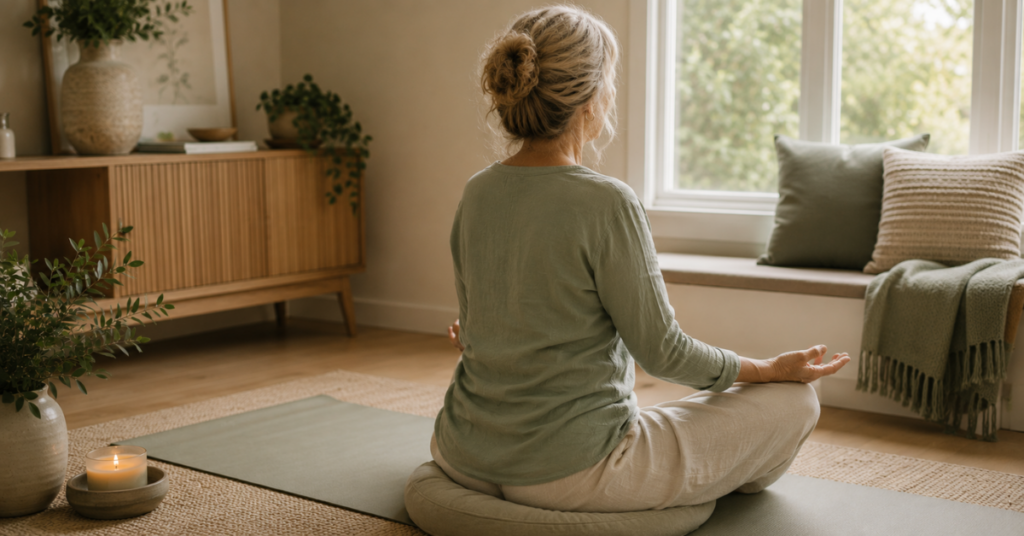
So I wrote one. A few intentions for how I want to feel and how I want to show up. Then I recorded myself reading them in my own voice. It’s short, about four minutes. I listen every morning before the day gets going.
That’s the act as if, made real. I don’t wait to feel magnetic and intentional. I press play, and I step into her.
And there’s a reason it works, beyond feeling nice. Researchers study the gap between what we mean to do and what we actually do. They call it the intention-behavior gap, and it’s humbling. We follow through on our good intentions only about half the time. What closes that gap is a clear intention you keep returning to. That’s all my recording is. Me getting clear, and rehearsing it, before the world sets my agenda for me.
If that appeals to you, you have options. Write and record your own, like I did. Or, if you’d rather just press play, I have a number of guided meditations inside Lifelong Yoga you can use to set your tone for the day.
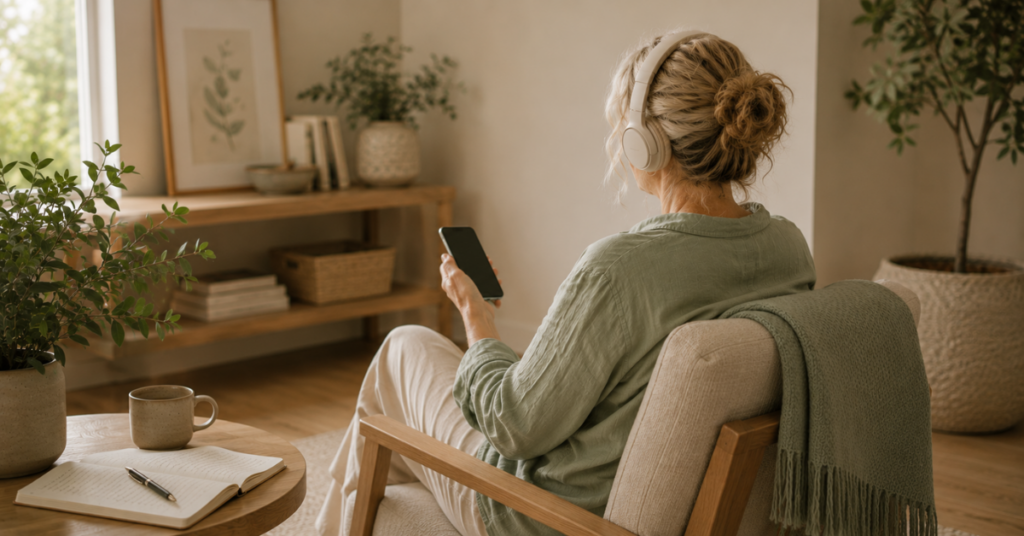
Binaural beats
One of my students introduced me to this one, and I went down a bit of a rabbit hole with it.
The mechanism is genuinely interesting. You play a slightly different tone in each ear through headphones, say 300 hertz on one side and 310 on the other. Your brain can’t reconcile the two, so it creates the perception of a third tone, pulsing at the difference, in that case 10 hertz. There’s no 10-hertz sound playing anywhere. Your brain makes it, starting in a small structure in your brainstem.
Those pulse frequencies line up with the natural rhythms your brain moves through. So they get grouped into bands:
- Delta, around 0.5 to 4 hertz, the deep-sleep range
- Theta, about 4 to 7 hertz, dreamy and meditative
- Alpha, around 8 to 13 hertz, calm but alert
- Beta, about 13 to 30 hertz, focus and alertness
Here’s how I actually use them. Alpha when I want to feel calm, outside with the dogs or getting ready in the morning. Beta in between clients, as a little reset to stay clear and focused through my workday. And delta, the slow ones, right before bed.
One honest note, because I won’t oversell you. Whether the sound truly syncs your brainwaves is still debated, and the studies on that exact question are mixed. But meta-analyses have found it can lower anxiety, sharpen focus, and even affect how we perceive pain. So whether or not it does the precise thing the wellness world claims, there’s real evidence it can help you settle. That’s reason enough for me.
Three good things
I know. The moment people hear the word gratitude, some eyes glaze over because it sounds cheesy. Stay with me, because there’s real science here.
It’s called three good things, sometimes three blessings. At the end of the day, you bring to mind three things that went well. That’s the whole practice.
The reason it works comes down to the negativity bias. To keep us safe, our brains are wired to scan for what’s wrong, what went badly, what might be a threat. It served our ancestors. But it means a lot of us drift toward the negative without realizing it, so we have to be intentional about rewiring that. Three good things steers your attention back toward what went right, and over time, you train your brain to notice the good on its own.
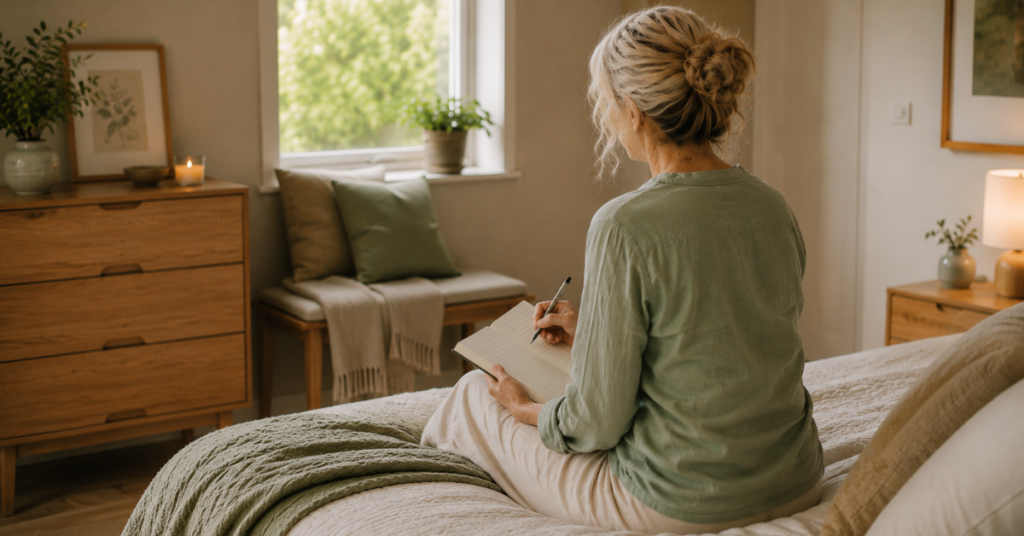
The research is strong. A landmark study from Dr. Martin Seligman at the University of Pennsylvania, one of the founders of positive psychology, had people do this for one single week. They were measurably happier and less depressed, with the effect still showing up six months later.
And they don’t have to be big. I think the small ones might be the most powerful. The first sip of coffee. Catching the clouds when you look up. A text from an old friend. The sun on your skin when you step outside. When it takes you a moment to land on something good, you start appreciating the little things you’d usually walk right past.
One bit of honesty: the research is strongest when people write them down. I don’t. I just run through them in my head. If you love a journal, write them. If you know you won’t keep that up, do the version you’ll actually do. The one in your head still counts.
Try one, not all
So those are the three things I’ve been leaning on this past month. A morning meditation to set my state, binaural beats through my day, and three good things at night.
Please don’t feel like you need to go do all of this tomorrow. But if one of them resonated, take that one and try it for a few days in a row. Notice how you feel. Notice how you’re reacting to things. Notice if anything shifts.
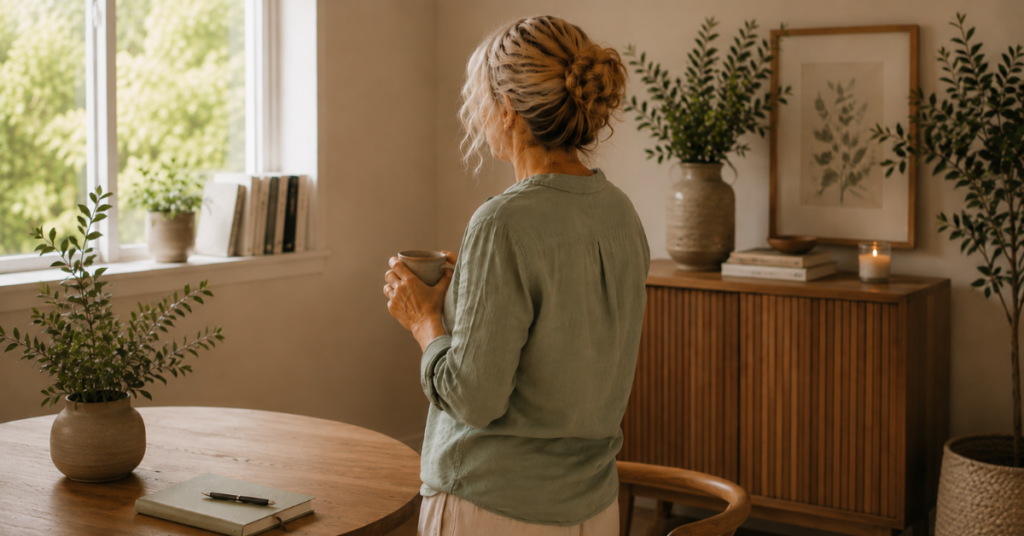
That’s a little of the self-study, svadhyaya, we always talk about in yoga. Turning your attention inward and paying attention.
Because I’m on this health journey right alongside you. I’m always working on something, and I like to share what I’m struggling with and what’s helping me right now. I hope today was helpful, or even a little inspiring.
If you’d like to practice this kind of thing with me, gentle therapeutic yoga made for healthy aging, come try Lifelong Yoga Online free for 7 days.