Flexible for Life After 50: What Actually Matters
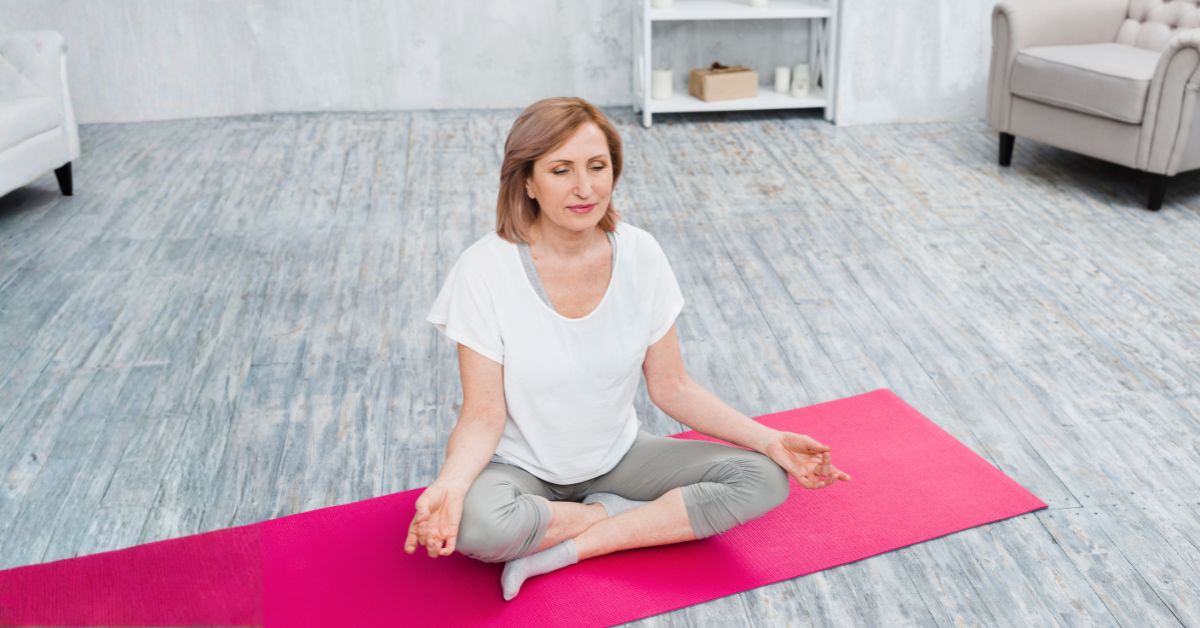
Aging brings wisdom we would not trade… but it also brings changes we feel in our joints, muscles, and connective tissue. You wake up a little stiffer. Your hips feel resistant. Your shoulders do not move quite as freely as they once did.
When someone says, “I just want to be more flexible,” they are rarely talking about doing the splits. What they usually mean is something much more practical. They want their body to feel easier to live in.
After 50, flexibility needs to be defined differently than it was at 25. Let’s talk about what actually matters… and what does not.
This post is adapted from Yoga for Longevity, my podcast where I share therapeutic yoga tools for healthy aging. I’m Mikah Horn, yoga therapist and founder of Lifelong Yoga Online, a membership designed especially for adults 50+. If you’re looking for a way to put the things you learn in this episode into practice, you can explore it free for 7 days, with gentle classes for joint health, healthy hips, posture, and more.
Rethinking Flexibility: From Stretching to Function
True flexibility is not about how far you can push yourself into a pose. It is about how much range of motion you can access comfortably… and control confidently.
I call this functional flexibility.
Functional flexibility might look like:
- Squatting down with steadiness at your personal depth
- Reaching overhead without your neck taking over
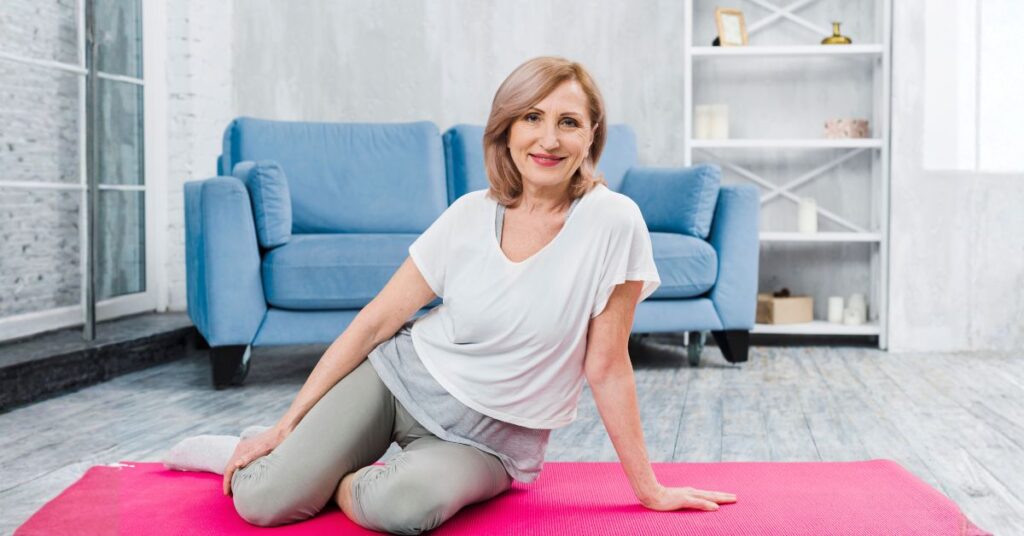
- Rotating to look behind you without feeling stuck
- Getting down to the floor and back up without hesitation
These are real-life movements. And here is the truth… if we do not use the range we have, we lose it.
Functional flexibility is about maintaining movement options. We do not want our world to get smaller as we age. We want to keep doing the things we love with freedom and ease.
Practice tip: Choose one daily movement you want to preserve… maybe getting up from the floor or reaching into a high cabinet. Practice it slowly and mindfully a few times a week. Train the movement, not just the stretch.
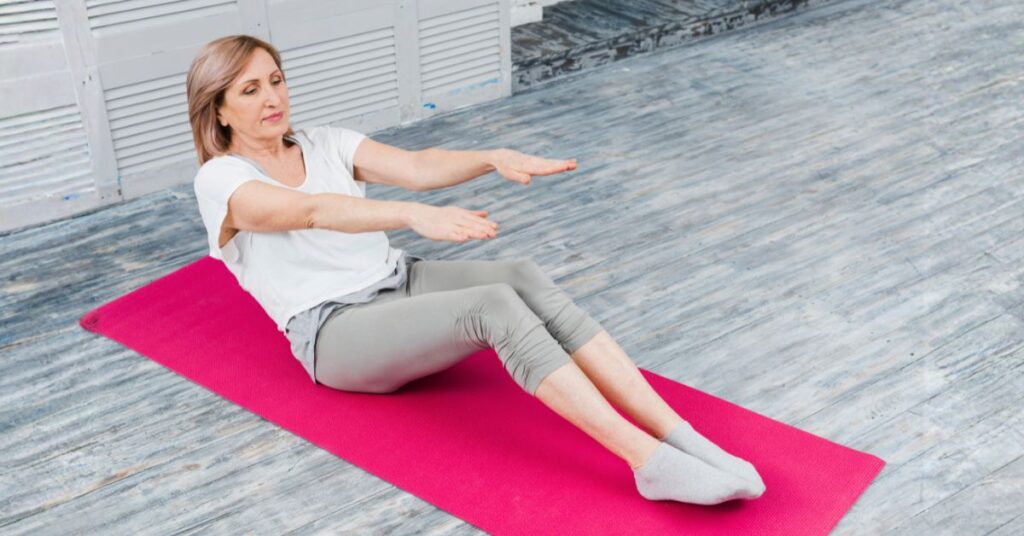
Why Stretching Alone Often Fails
Many people tell me, “I stretch, but I still feel tight.”
That does not mean stretching does not work. It usually means the approach lacks structure.
Flexibility responds to repetition, sequencing, breath, and consistency. If you stretch without preparing the joint first, you are often working against protective muscle tone. If you move quickly in and out of positions, your nervous system never has time to recalibrate. And if you only stretch one area without addressing surrounding mechanics, compensation patterns remain.
Tightness is often your body trying to protect instability.
So instead of forcing deeper shapes, we need a smarter sequence.
Gentle is powerful… especially when it is consistent.
The Three-Part Framework for Functional Flexibility
In my work with adults over 50, I use a simple three-part structure.
1. Mobility First
We begin with gentle joint movement. This circulates synovial fluid inside the joints and wakes up surrounding muscles. Think slow circles, controlled hinges, easy rotations. Nothing forced.
2. Add Control
Next, we build light strength within the available range. When muscles around a joint are doing their job, the nervous system feels safe. Safety reduces unnecessary tension.
If something feels unstable, your body tightens to protect it. That tightening is often what we interpret as stiffness.
3. Then Stretch
Only then do we move into longer, steady holds. Research shows we need at least 20 to 30 seconds in a stretch to create measurable improvements in range of motion. Stay a bit longer and something deeper happens… your nervous system begins to settle.
What improves is not just muscle length. It is your tolerance for the position. Your body decides, “This is safe.”
And that is when range starts to feel easier instead of forced.
This is function over form. It is not about chasing deeper poses. It is about supporting the movements that support your life.
Bringing It All Together
Flexibility after 50 is not about becoming more bendy. It is about preserving and supporting the movement options that matter in your daily life.
If you do not move it, you lose it. But if you train it intelligently, you can maintain it… and often improve it.
Start with mobility. Add control. Then stretch with patience.
Consistency beats intensity every time.
If this approach resonates with you, I am teaching a live masterclass called Flexible for Life where we walk through this exact framework step by step. We will cover the science in simple terms and move through a guided practice you can apply right away. A replay is available if you are reading this later.
👉 Register for the Flexible for Life masterclass.
Longevity starts now. And the goal is not extreme range. It is freedom, steadiness, and confidence in your body for years to come.
Until next time, keep moving with intention and joy.
Connect with Mikah
Try 7 Days Free in Lifelong Yoga Online
Work with Mikah 1:1: Private Yoga Therapy
Instagram: @lifelong.yoga
Facebook: Lifelong Yoga with Mikah