The Surprising Things That Predict How Well You’ll Age (New Research!)
This post is adapted from Yoga for Longevity, my podcast where I share therapeutic yoga tools for healthy aging. I’m Mikah Horn, yoga therapist and founder of Lifelong Yoga Online, a membership designed especially for adults 50+. If you’re looking for a way to put the things you learn in this episode into practice, you can explore it free for 7 days, with gentle classes for joint health, healthy hips, posture, and more.
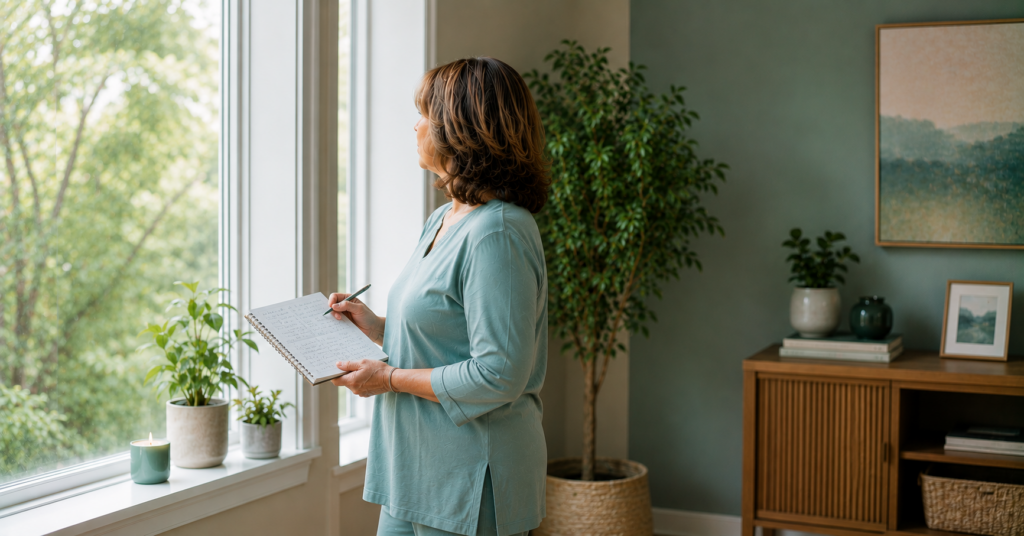
I’m going to out myself right away. I am a nerd. (A proud nerd!) The kind who falls into a research rabbit hole at 10 at night and looks up an hour later with 12 tabs open and a notebook full of scribbles. I love learning. Always have. Especially when it comes to a topic I’m passionate about.
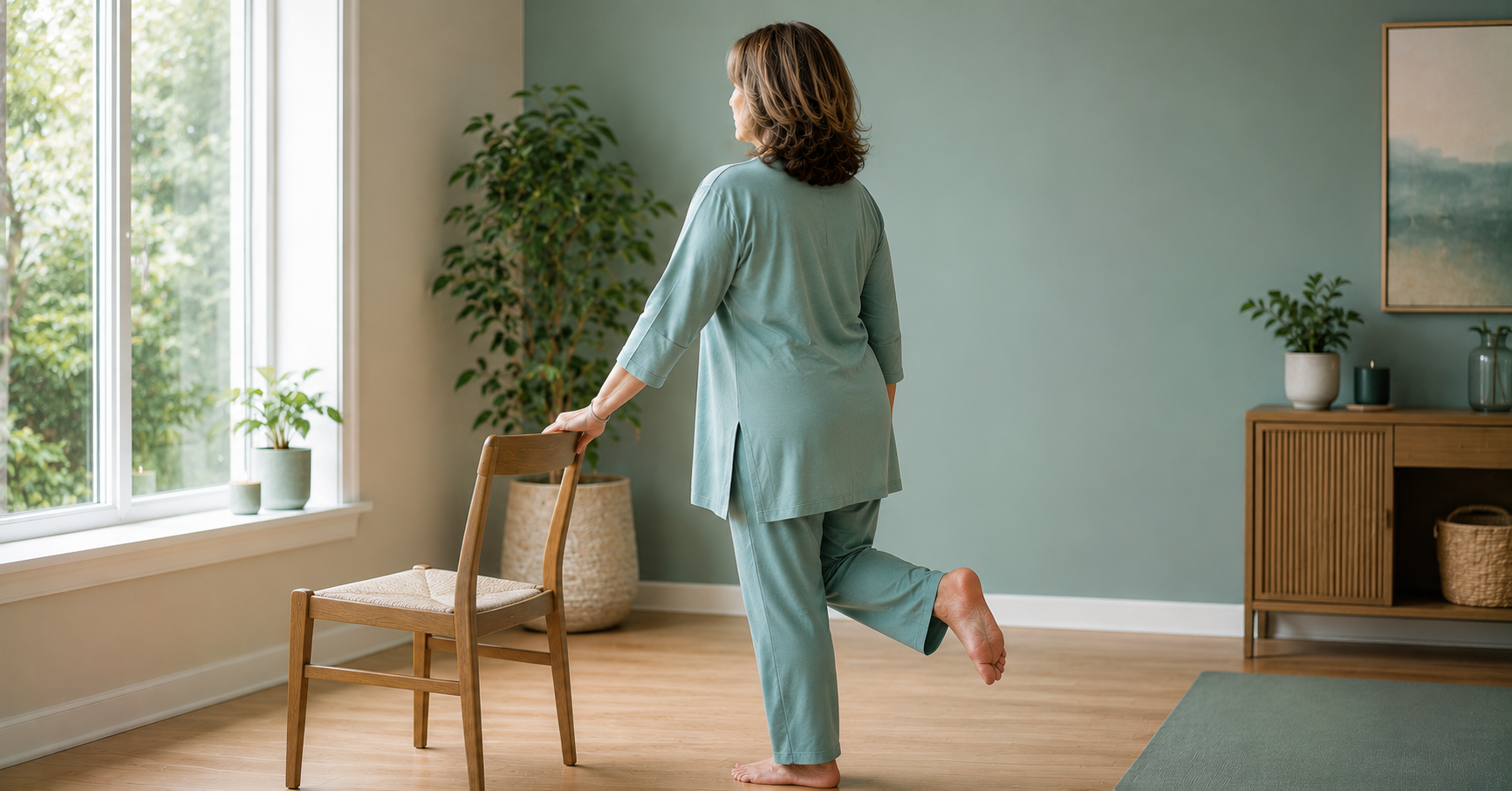
And lately my rabbit holes keep leading to the same place: longevity. Specifically, all the tests that supposedly tell you how well you’re going to age. Have you noticed how many of these there are now? Grip strength. How fast you walk. How long you can stand on one leg. How many times you can stand up from a chair in thirty seconds. Getting up and down off the floor with no hands.
I keep wondering why all of this is having such a moment. I don’t think I have the whole answer, but here’s my best guess. For a long time, the conversation around health was mostly about disease. Treating it, avoiding it, surviving it. And somewhere along the way the question shifted. It became less about how long we live and more about how well. How many years we get to spend strong and capable and free before things start to break down. Healthspan, some people call it. The years you live without chronic disease running the show.
And honestly? I love that the question changed. Because the moment you start asking how well instead of just how long, movement moves to the center of the conversation. Which is, of course, my whole world.
So in this week’s episode I dug into a couple of newer studies behind these markers, and I want to share what they found, because I think it’s more hopeful than the headlines make it sound.
The first one surprised me. A big study published this year by JAMA Network Open followed thousands of women into their nineties, and it measured strength in two simple ways: how hard they could squeeze their hand, and how quickly they could stand up out of a chair. Both turned out to predict how long the women lived.
Start with the grip. I know how that sounds, like you should go buy a stress ball. But what the grip really shows you is bigger than your hands. A strong grip tends to mean a strong body, an active life, a nervous system that’s still firing well. It’s a quick read on the whole of you. So no gadgets required. You build a stronger grip by being a stronger, more active person. And yes, by bearing weight through your hands the way we do in yoga.
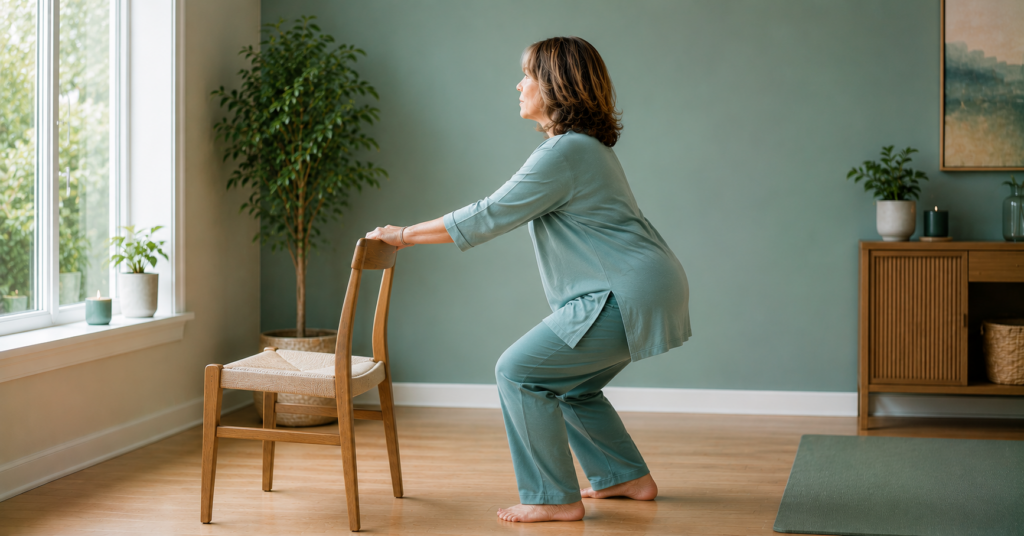
The second measure in that same study was the chair stand. How easily you get up from a seat, or down to the floor and back. It predicts a surprising amount about aging well, and it makes sense, because it asks for leg strength, balance, coordination, and a body that trusts itself, all at once. If you’re reading this and thinking the basic version sounds too easy, good. That’s the right instinct. For you, the interesting part is making it harder: from a lower seat, or trying it on one leg, or going all the way down to the floor and up again.
Then there’s the second study, the one I keep thinking about. Researchers at Harvard found this year that the variety of your movement matters, maybe as much as the amount. They followed more than a hundred thousand people for decades and counted how many different kinds of activity each person did. Walking, swimming, lifting, yoga, gardening, climbing stairs. The people who did the widest variety lived longer, and that held true no matter how much total activity they got.
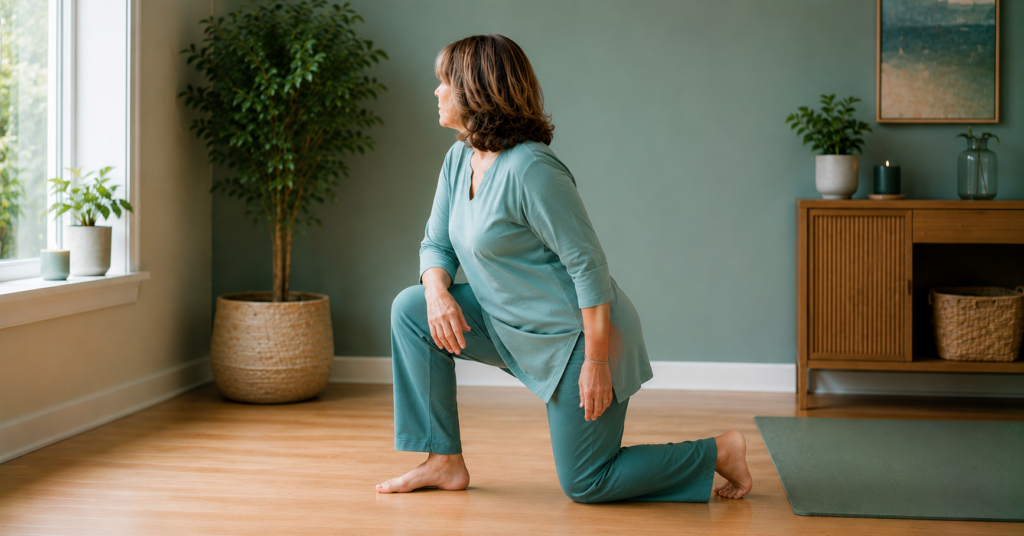
Now, my first instinct was to say, well, that’s yoga, a good practice gives you variety all in one place. And there’s truth in that. A practice does move you in directions a normal day never asks for: forward and back, side to side, twisting, reaching, balancing, slow and still and strong. So yes, yoga adds back a lot of the range most of us lose.
But really, that study wasn’t measuring variety inside a single workout. It was counting how many different kinds of movement people did across their whole lives. So the real takeaway is bigger than yoga, and bigger than any one thing. Walk. Practice yoga. Lift something heavy now and then. Get down on the floor and back up. Garden. Spread your movement around. The body wants range, and it wants you using that range in a lot of different ways.
Which brings me to the conversation everyone’s having right now: strength training. And I think it’s wonderful. But I hear from so many of you that it leaves you feeling behind, like everyone’s lifting weights and you’re not sure where to even begin. So let me say this plainly. Before you load your body, you want to be able to control the body you already have.
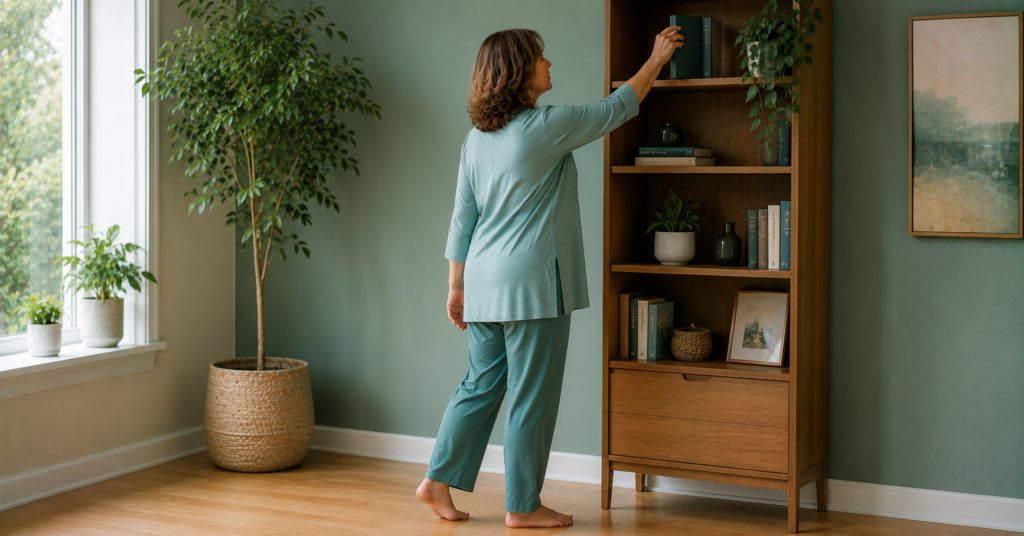
Coordination you trust. Joints that move freely. A grip that’s engaged. That’s the foundation, and that’s what yoga builds. The way I teach strength is around what I call the independence muscles: the ones that carry the groceries in from the car, get you up off the floor, climb the stairs, open the stubborn jar. Yoga and strength training work together. The mat is what makes the lifting, and the walking, and the getting up off the floor, all of it, safer and more effective.
These markers, strength, balance, the freedom to move in every direction, aren’t separate from what I teach. They’re the five pillars of movement longevity I build every class around. And the best part is that none of it is out of reach. You are not behind, and you are not too late. The way you move today is shaping how you’ll feel for years.
PS. If you’re nodding along and you want a movement practice built around these exact things, strength, balance, joint health, posture, and flexibility, that’s what we do every week inside Lifelong Yoga Online. You can explore it free for 7 days and see how it feels in your body. And if bone health is on your mind too, my new course Strong Bones, Safe Yoga has a priority list open right now. It opens to that list at the end of June, and joining gets you the best pricing it’ll ever have.