Why “Sitting Up Straight” Won’t Fix Your Posture

We’ve all heard it before: sit up straight, pull your shoulders back, tuck your chin. Maybe it came from a teacher, a parent, or even the voice in your own head. The problem is that forcing yourself into a rigid “perfect posture” doesn’t work. It leaves you tense, uncomfortable, and right back where you started.
Posture doesn’t improve by locking your body in one position. It improves when your body is free to move, strengthen, open, and reset. That’s why true posture support comes from a holistic approach… one that feels natural instead of forced.
This post is adapted from Yoga for Longevity, my podcast where I share therapeutic yoga tools for healthy aging. I’m Mikah Horn, yoga therapist and founder of Lifelong Yoga Online, a membership designed especially for adults 50+. If you’re looking for a way to put the things you learn in this episode into practice, you can explore it free for 7 days, with gentle classes for joint health, healthy hips, posture, and more.
Step One: Movement Variability
Movement is like nutrition. Your body thrives on variety. When you sit or stand in one shape all day—even in “good alignment”—your joints stiffen, your muscles weaken, and your tissues miss the nourishment they need.
That’s why one of my favorite sayings is: “Your best posture is your next posture.” Small, frequent shifts in how you sit, stand, and move keep your system flexible and adaptable. Try standing up every 30 minutes to stretch, twist gently, or simply walk a few steps. Each adjustment helps your body reset.

Step Two: Strength and Support
Posture isn’t about stiff discipline. It’s about having the muscular support that makes upright alignment feel natural. When the spinal erectors, shoulder stabilizers, and glutes are weak, posture feels like effort. You end up overusing smaller muscles in the neck and low back, which often leads to pain.
Yoga poses like Locust, Cobra, and Bridge can strengthen the back body. Over time, these muscles act as scaffolding, holding you tall without strain. Posture stops feeling like hard work and becomes your body’s natural state.
Step Three: Opening Tight Spaces
Strength alone isn’t enough. Many people struggle with posture not because they lack discipline, but because the front of the body—chest, shoulders, hips—is too tight to allow upright alignment.
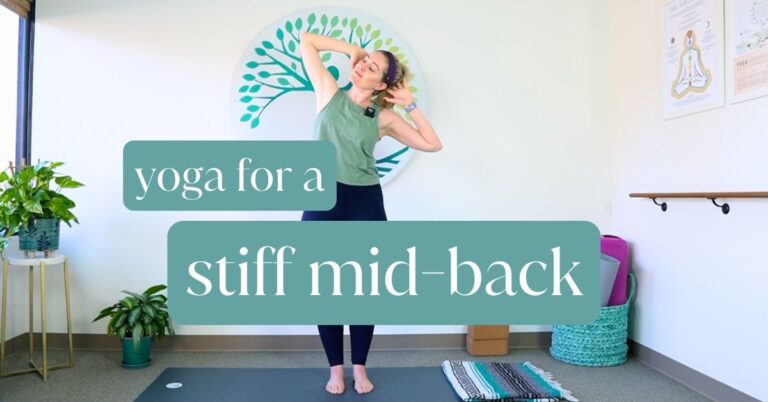
Yoga’s mobility practices create the space your posture needs. Supported backbends open the chest, shoulder stretches release hunching, and hip openers restore balance to the pelvis. As the front body loosens, the back body no longer has to fight against it. Upright posture begins to feel easy and sustainable.

Step Four: Awareness
The final step ties everything together. Awareness is noticing where your body holds tension, how your breath moves, and what patterns pull you off balance. It’s not about judgment. It’s about choice.
Yoga is uniquely powerful here because it trains both body and awareness. Each time you pause in practice to feel and notice, you build the skill of self-adjustment. Over time, awareness transforms posture into something you live, not something you force.
Bringing It All Together
Healthy posture isn’t about sitting up straight and holding it with discipline. It’s about nurturing your body’s capacity with variety, strength, mobility, and awareness.
When practiced consistently, these four steps create lasting change in how you stand, breathe, and move through your day. If posture is on your mind, I’d love to invite you into the free 7-Day Yoga for Posture Challenge. Together we’ll put this framework into practice with simple daily sessions designed to build strength, open tight spaces, add movement variety, and develop awareness.
👉 Join the free challenge here.
Mentioned in this episode:
WebMD: What is Upper Crossed Syndrome
Connect with Mikah:
Membership: Lifelong Yoga Online
Work with Mikah 1:1: Private Yoga Therapy
YouTube: Lifelong Yoga with Mikah
Instagram: @lifelong.yoga