Yoga Myths… Busted! Clearing the Beliefs That Hold You Back
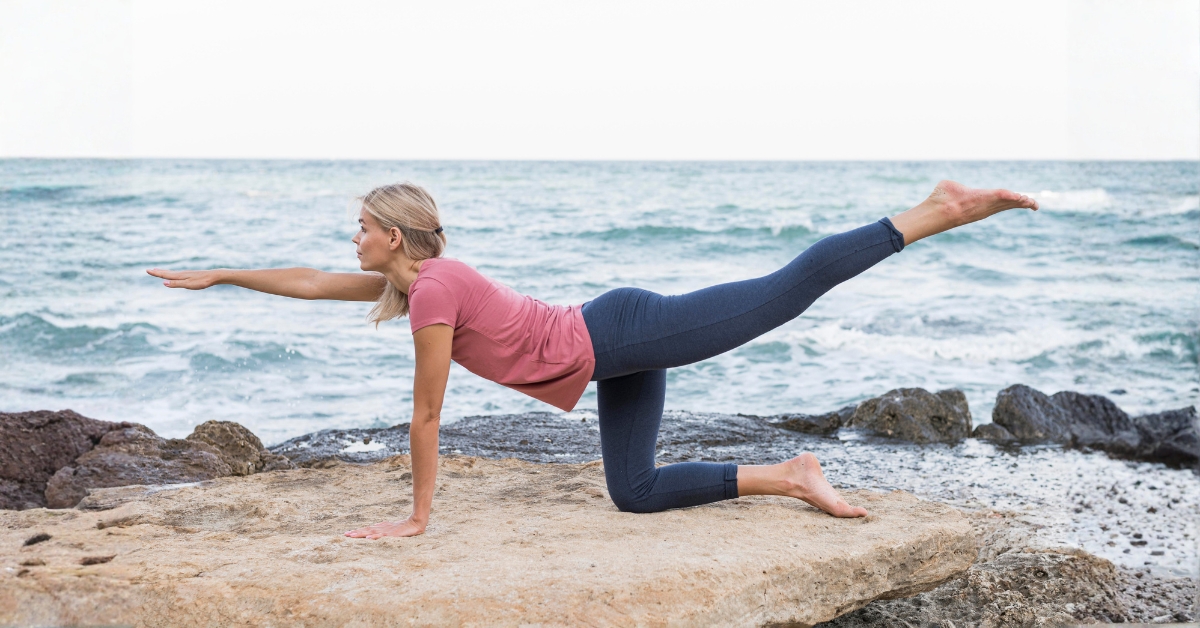
As we head toward a new year, it’s a natural time to reflect on what we want to carry forward…and what we’re ready to leave behind. In yoga, it’s often not our bodies that hold us back, but the beliefs we’ve absorbed over time. Ideas about flexibility, time, and aging quietly shape how we move and what we think is possible. Clearing out these myths can open the door to a practice that feels supportive, sustainable, and genuinely good in your body.
This post is adapted from Yoga for Longevity, my podcast where I share therapeutic yoga tools for healthy aging. I’m Mikah Horn, yoga therapist and founder of Lifelong Yoga Online, a membership designed especially for adults 50+. If you’re looking for a way to put the things you learn in this episode into practice, you can explore it free for 7 days, with gentle classes for joint health, healthy hips, posture, and more.
Myth #1: “I’m just not flexible enough for yoga.”
This is one of the most common beliefs I hear, and it usually comes from a misunderstanding of what flexibility really is. Many people think flexibility is something you’re either born with or something that inevitably disappears with age. The truth is much simpler. Flexibility is not a prerequisite for yoga. It’s something that develops because of yoga.
It also doesn’t come from pushing into big, dramatic stretches. Flexibility improves when your nervous system feels safe enough to release tension. That’s why gentle, consistent mobility work is often far more effective and sustainable than forcing your body deeper.
When someone says, “I’m not flexible enough,” what they often mean is, “I don’t know where I fit,” or “I’ve seen yoga look a certain way and my body doesn’t match that.” And those concerns make complete sense. We’re constantly shown images of deep folds and pretzel-like poses that make yoga seem exclusive to the young and ultra-flexible.
Yoga for longevity works differently. There is no physical requirement you need to meet before you begin. Showing up as you are is enough. With the right approach, your practice can meet you where you are today and help you grow from there.

Myth #2: “If it’s not 45 minutes, it doesn’t count.”
This belief comes from old exercise culture…longer, harder, and more structured must be better. But when we look at habit science and what actually supports healthy aging, the message is clear. Your body responds to consistency, not duration.
Research on behavior change shows that habits stick when they’re small and repeatable. Five or ten minutes of movement. One or two poses. A short standing sequence. Even a simple breathing practice while your coffee brews. These moments all count.
Short practices aren’t a compromise. They’re often the reason people finally build a yoga habit that lasts. Real life is busy, and energy fluctuates, especially as we age. A practice that can flex with your life is far more powerful than one that only works on “perfect” days.
Inside Lifelong Yoga Online, I offer a wide range of class lengths for this exact reason. Some days support longer sessions. Other days call for what I like to think of as snack-sized yoga. Both are valuable. Consistency beats intensity every time.

Myth #3: “My body should still move the way it did years ago.”
This myth can carry the most emotional weight. Many of us remember how easily we once moved…how steady our balance felt, how natural it was to get up and down from the floor. When things feel different now, it’s easy to assume something has been lost for good.
Here’s the truth. Your body is meant to change over time. And that doesn’t mean it’s done improving. The human body is designed to adapt at every age. Strength, mobility, balance, posture, and stability can all improve well into your seventies, eighties, and beyond.
They simply need to be trained differently. Slow, mindful, consistent movement works. I see this every day with my students. One student who once felt very shaky with balance is now confidently exploring more challenging poses. Another returned to the floor and deep squat positions after knee replacement surgery through steady, therapeutic practice.
When you stop measuring yourself against a younger version of your body, you free up energy to focus on what’s possible now. And what’s possible now is a lot.

Bringing It All Together
As we move toward 2026, these are powerful beliefs to release. You don’t need to be flexible to start. Short practices matter. And while your body may not move the way it did decades ago, progress is still fully possible.
Yoga for longevity isn’t about going back. It’s about moving forward with awareness, patience, and consistency. If you’d like to support putting these ideas into practice, you’re always welcome inside Lifelong Yoga Online, where gentle, functional movement meets you exactly where you are.
Until next time, keep moving with intention and joy.
Connect with Mikah
Membership: Lifelong Yoga Online
Work with Mikah 1:1: Private Yoga Therapy
YouTube: @yogawithmikah
Instagram: @lifelong.yoga