Yoga That Grows With You: Adapting for Aging, Injury, and Life Changes

Aging, injury, and major life transitions all have one thing in common… they change how we move through the world. Your body may not bend, balance, or recover the way it once did. That can be frustrating, but it’s also an invitation. Yoga isn’t meant to stay the same year after year. It’s meant to grow with you, supporting your changing body and life with compassion, not comparison.
This post is adapted from Yoga for Longevity, my podcast where I share therapeutic yoga tools for healthy aging. I’m Mikah Horn, yoga therapist and founder of Lifelong Yoga Online, a membership designed especially for adults 50+. If you’re looking for a way to put the things you learn in this episode into practice, you can explore it free for 7 days, with gentle classes for joint health, healthy hips, posture, and more.
Your Practice Is Meant to Evolve
Your yoga practice isn’t supposed to look the same at 60 as it did at 20. Our bodies, energy, and priorities naturally shift with time. The goal isn’t to keep doing what you used to. It’s to keep showing up in ways that feel good now.
When I first began yoga, I was drawn to the heat and intensity of hot yoga. I wanted to sweat and push and feel powerful. That matched who I was at the time. Now, strength still matters to me, but I care more about how my body feels after practice than how deep I can go during it. That shift isn’t a loss. It’s wisdom.
Try this: the next time you practice, notice how your body feels after each pose rather than how the pose looks. That small change in attention builds awareness, sustainability, and self-trust… the real core of lifelong practice.

Meeting Change with Non-Attachment
One of yoga’s guiding principles, aparigraha, means non-attachment. It teaches us not to cling too tightly to what was, whether that’s a younger body or an old version of our practice.
Letting go doesn’t mean you stop caring. It simply means softening your grip so the next version of your practice can arrive. Just as you release each breath to make space for the next, non-attachment invites you to release what no longer serves and welcome what’s here now.
If you find yourself grieving what your body used to do, honor that feeling. Then take a deep breath and allow this season of your practice to unfold with gentleness. You can’t go backward, but you can keep deepening forward.
Practical Ways to Adapt Your Practice
In real life, an adaptive yoga practice might look like:
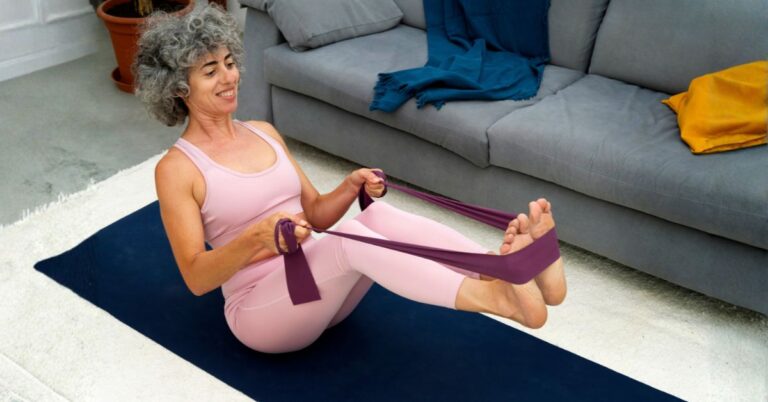
- Shorter, more frequent sessions instead of long weekly classes
- Using a chair or wall to make transitions smoother
- Incorporating gentle strength work to support joints and bone density
- Choosing mobility and balance training over deep flexibility work
- Restorative or supported poses to ease the nervous system
One of my Lifelong Yoga members, Alice, recently had knee surgery and couldn’t comfortably rest in Child’s Pose. I created her a video that explored alternatives that offered the same sense of rest and grounding without straining her joint. The goal isn’t to perform the traditional shape. It’s to honor the intention behind it.
When you adapt your poses to fit your body, you’re not making your practice smaller. You’re making it more personal, and that’s what growth looks like.

Bringing It All Together
Your yoga will keep changing, just as you do. Some seasons will feel slower, others stronger, but every moment of mindful movement adds to your foundation. Progress in yoga isn’t about pushing harder. It’s about continuing to listen.
If you’re ready to shape your practice around your body as it is today, with guidance and support along the way, I’d love for you to explore Lifelong Yoga Online. You can start a free 7-day trial and discover classes for strength, balance, and mobility that truly meet you where you are.
Until next time, keep moving with intention and joy.
Connect with Mikah
Membership: Lifelong Yoga Online
Work with Mikah 1:1: Private Yoga Therapy
YouTube: Lifelong Yoga with Mikah
Instagram: @lifelong.yoga