Balance is a Brain Skill: How to Improve Your Balance After 60
Balance is one of those things you don’t realize has changed until something happens. There’s a fall, or a friend has a fall, and suddenly you’re paying attention.
I’d rather you paid attention now, while you still have every option in front of you.
Balance is a skill. It can be practiced, it can be improved, and it can be maintained for your whole life. Of the five pillars I build my teaching on, this is the one I am most confident I can help you change. So let me tell you what balance is actually made of, and what actually trains it.
This post is adapted from Yoga for Longevity, my podcast where I share therapeutic yoga tools for healthy aging. I’m Mikah Horn, yoga therapist and founder of Lifelong Yoga Online, a membership designed especially for adults 50+. If you’re looking for a way to put the things you learn in this episode into practice, you can explore it free for 7 days, with gentle classes for joint health, healthy hips, posture, and more.
What the Numbers Say About Falls After 65
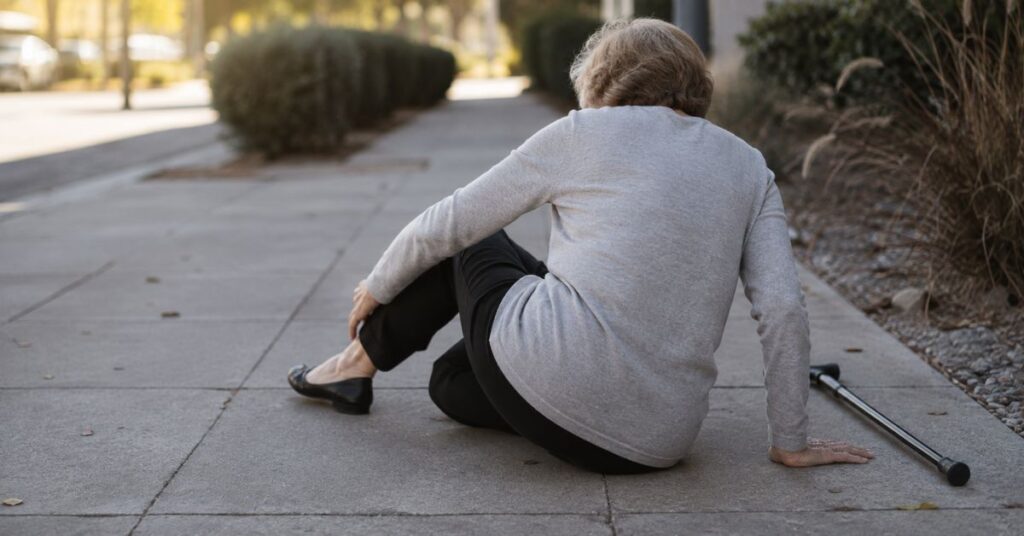
More than one in four adults over 65 falls every year, and less than half of them ever tell their doctor. That second part is the one that gets me. It’s happening to far more people than anybody is talking about, because there’s shame wrapped around it.
Nearly 319,000 older adults are hospitalized for a hip fracture in this country every year, and falling once doubles your chances of falling again.
Put that next to what we talked about in the recent strength episode, that women can lose up to twenty percent of their bone density in the years around and after menopause, and you can see the two things moving at once. Bone that’s more fragile than it was. Balance that isn’t getting practiced. That combination is what turns an ordinary trip on the sidewalk into a broken hip.
How Fear of Falling Makes Falling More Likely
Here’s the part I want you to sit with, and it isn’t my opinion. The CDC says it outright: many people who fall, even if they aren’t injured, become afraid of falling, and that fear may cause a person to cut down on their everyday activities. When a person is less active, they become weaker, and this increases their chances of falling.
I watch that happen in slow motion. You feel a little unsure, so you move a little less. You take the paved path instead of the grass. You hold the rail with both hands. You stop getting down on the floor.
Every one of those decisions makes sense on its own. Together, they take away the exact practice your balance depends on.
Being careful and improving your balance are two different things.
What Balance Is Actually Made Of
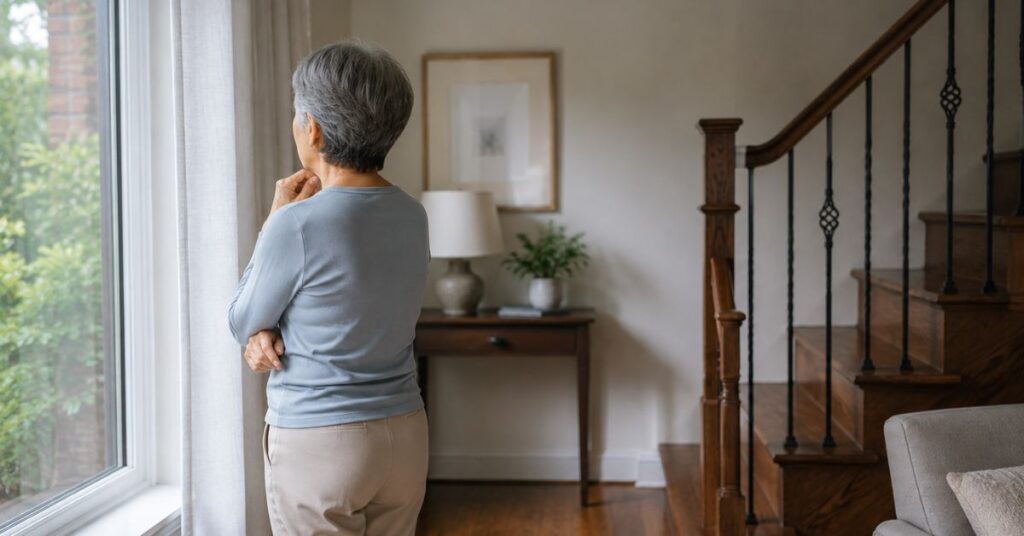
Balance feels like one simple thing you can either do or you can’t. It’s actually three separate systems feeding information to your brain at the same time.
Your vision tells you where you are in the room, where the floor is, what’s level and what isn’t.
Your vestibular system, in your inner ear, tells your brain which way your head is tilting and how fast it’s moving. That’s the system that gets involved when you turn your head to look at something while you’re walking.
And proprioception is your body’s own awareness of itself. It comes from receptors in your muscles, tendons, joints and skin that report your position constantly, without you thinking about it. It’s how you can close your eyes and still know exactly where your arm is.
That third one does fade with age. The receptors themselves change and the signal doesn’t travel as fast as it once did. But older adults who stay physically active have measurably better proprioception than those who don’t. This is trainable, and it is trainable late.
Those three systems are what balance is based on. But you still live in a body, and your body has to be able to take those signals and actually carry them out. That’s where strength and mobility come in.
The Hip Muscle That Keeps You Steady
I’m a bit of a nerd about the gluteus medius, so bear with me.
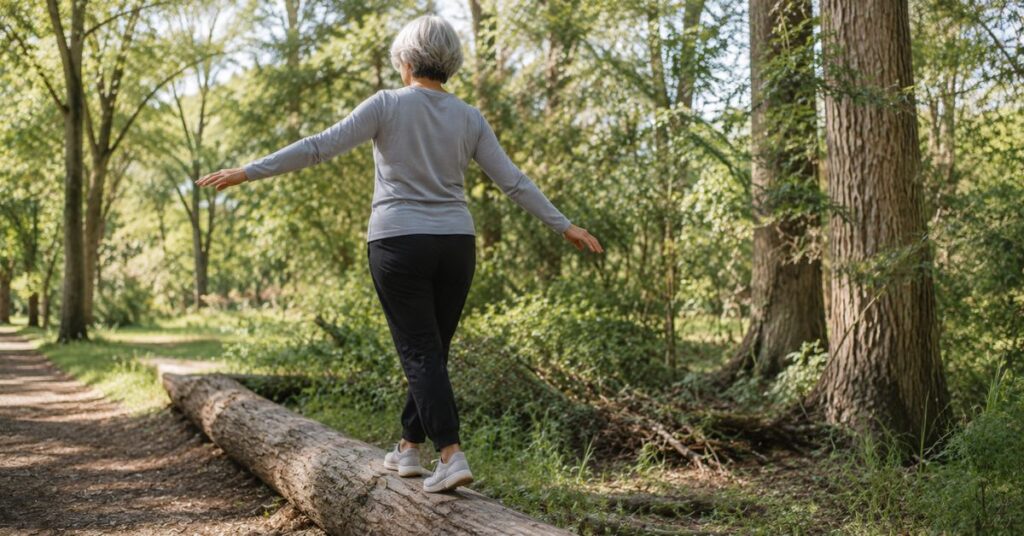
It sits on the side of your hip, and its job is to keep your pelvis level when you’re standing on one leg. Now think about walking. Every single step you take, there is a moment when you are on one leg. Half of walking is standing on one leg.
When that muscle is weak, you don’t experience it as a weak hip. You experience it as being unsteady on your feet. Most people never connect those two things, and so they never train the muscle that would fix it.
Your ankles matter here too. If your ankle can’t move well, it can’t make the small fast corrections that keep you upright, which is the ankle mobility I wrote about a few weeks ago. A stiff ankle takes away one of your quickest ways to catch yourself.
Why Standing on One Leg Is Only Part of Balance Training
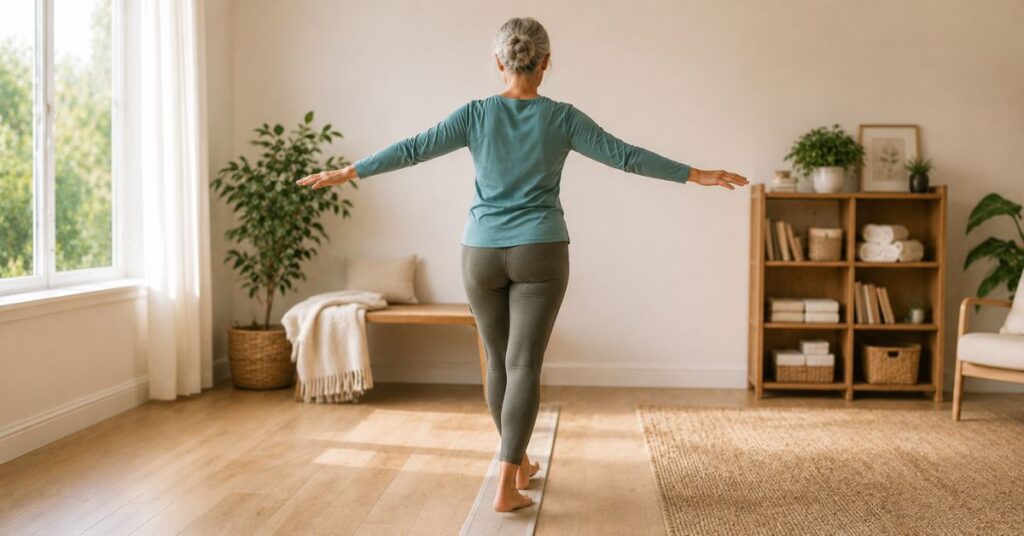
Most balance advice stops at holding a pose. Stand on one leg, count to thirty.
Static balance does real work, and I teach it. It’s how you learn where your center actually is, because nothing else is moving and you can feel every small correction your body makes. It builds endurance in the stabilizers. And it gives you something you can measure, which matters more than people realize when your confidence has taken a hit.
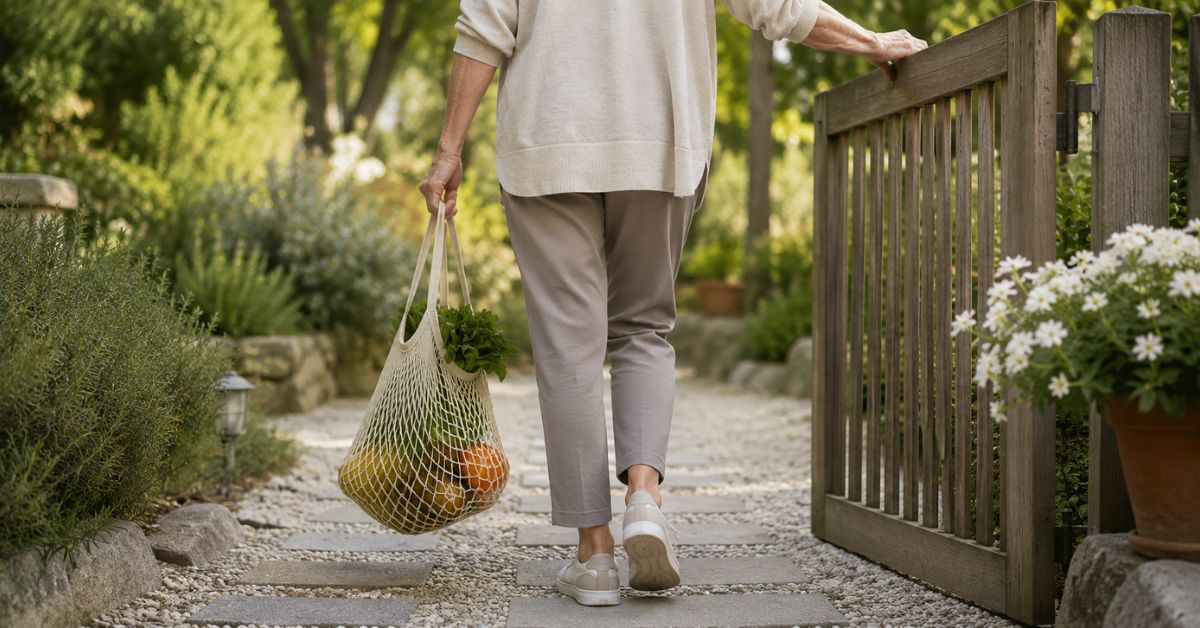
But think about when your balance actually gets challenged in an ordinary day. You turn around fast because someone said your name. You step over the dog. You reach into a high cabinet. You walk across gravel. You carry groceries in one arm and open the door with the other.
There is movement in every one of those. Life isn’t static, so your balance practice shouldn’t be either.
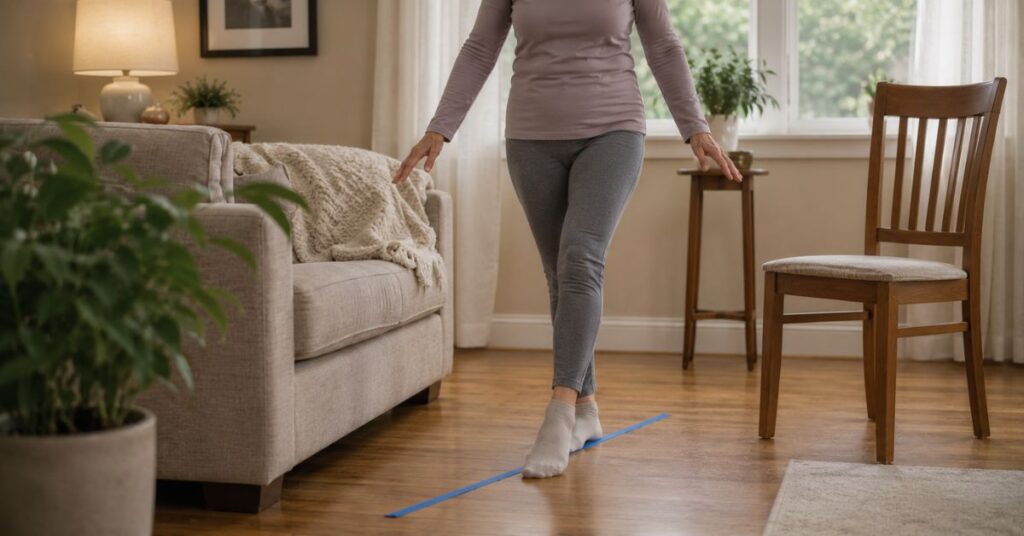
So in my classes we walk heel to toe. We step side to side. We turn the head while we’re moving, which challenges the vision and inner ear directly. We practice reactive balance, where you purposely take yourself off center so you can bring yourself back, safely, with a chair right there. We practice transitions, sitting to standing, getting down to the floor and back up, turning all the way around.
And all of that makes you wobble.
What’s Really Happening When You Wobble
When you wobble, your body has noticed you’re off center and corrected. Your ankle fires, your hip catches you, your brain reads all three systems and adjusts, in under a second.
That’s the skill you came to build, happening right in front of you.
So when my students start to wobble and get frustrated with themselves, I tell them that’s the part that’s working. We explore it. We have fun with it.
And this is where the chair comes in. My students apologize to me for holding the chair, and there is nothing to apologize for. Using support is what lets you actually challenge yourself. If you’re gripping something and frightened, you aren’t learning, you’re just getting through it. With a chair right there you’ll try the harder version, and the trying is where the improvement lives. Two hands, then one hand, then two fingers, then hovering. That’s a progression you can run yourself at home.
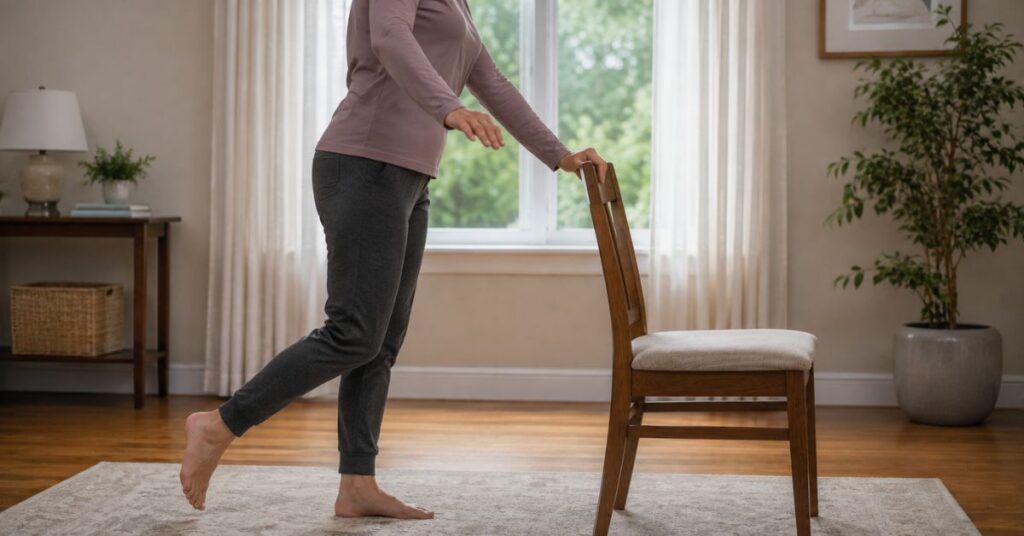
Balance Is a Skill You Can Practice at Any Age
A study published in February of this year followed adults between 65 and 85 through twelve weeks of daily yoga. Their balance improved by a meaningful amount and their fear of falling went down. These were people living in residential care, so if you’re younger or more active than that, take it as very good news. If they can improve in twelve weeks, so can you.
The other half of that study is the part I’d want you to remember. The group that didn’t practice didn’t hold steady. Over those same twelve weeks, their balance got worse.
That’s how I think about this whole pillar. We aren’t trying to build a body that never loses its balance. We’re building a body that knows how to find it again.
P.S. Balance is one of the five pillars my new beginner program, Lifelong Yoga Foundations, is built on. It opens at the end of September, and you can join the priority interest list here. The list hears everything first (and gets the best pricing).