How Yoga Builds Real Strength After 50 (Without Lifting Heavy)
Lately, almost every conversation I have with my students over 50 circles back to the same thing. Someone has told them they need to lift heavy. A doctor, a trainer, a headline, a well-meaning daughter. And they come to me a little anxious, asking if the yoga they love is “enough,” or whether they’re falling behind by not being in a gym with a barbell.
I want to answer that clearly, because I think the pressure is doing more harm than the barbell ever would. There’s nothing you have to prove. And there’s a smarter place to start than heavy.
This post is adapted from Yoga for Longevity, my podcast where I share therapeutic yoga tools for healthy aging. I’m Mikah Horn, yoga therapist and founder of Lifelong Yoga Online, a membership designed especially for adults 50+. If you’re looking for a way to put the things you learn in this episode into practice, you can explore it free for 7 days, with gentle classes for joint health, healthy hips, posture, and more.
Why We Lose Muscle and Bone as We Age
We do lose muscle over time, and it isn’t a small thing. After about age 30, most of us lose somewhere between 3 and 5 percent of our muscle per decade, and that loss speeds up after 60. It’s silent. Nothing hurts. You just notice one day that the stairs ask a little more of you, or that getting up off the floor takes a plan.
And it isn’t only muscle. We lose bone too, and women can lose up to 20 percent of their bone density in the years around and after menopause. That’s the part I really want you to hear. Weaker bone is what turns an ordinary fall into a fracture, and a fracture is what can change everything about a person’s independence. If your bones are on your mind, I went deep on this in my recent osteoporosis episode, and it pairs well with this one.
So yes, strength matters. It may be the part of aging we have the most say over. The question is never whether to build it. The question is how.
You Don’t Have to Lift Heavy to Build Strength After 50
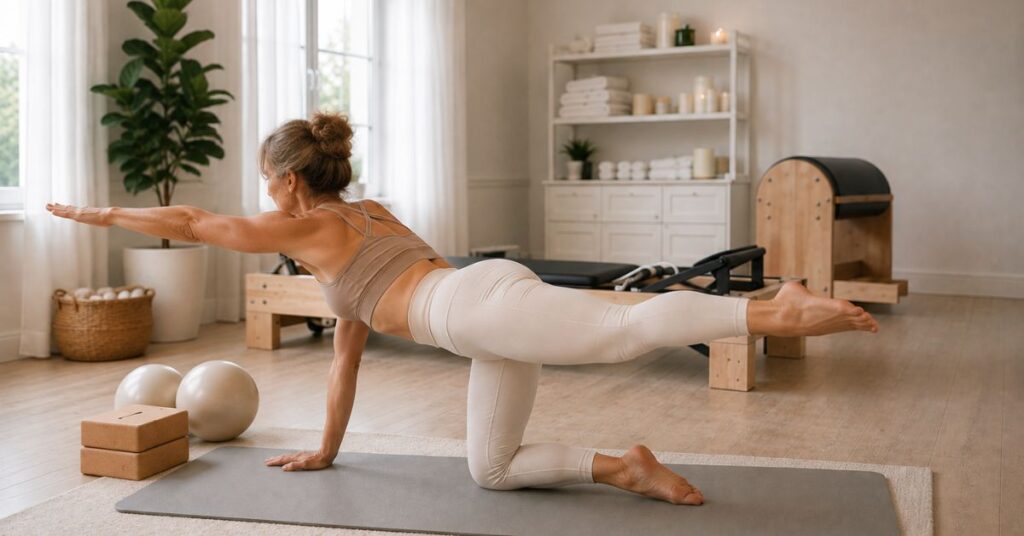
This is where I part ways with most of what you’re hearing. I’m not against weights at all. But almost nobody hands you a path to get there. They just say lift heavy, as if you’re supposed to already know how to load a body that hasn’t been asked to work hard in years.
My path is different, and it’s the whole design of what I teach. You build a lot of strength with your own body weight first. You get to know your body, you learn how to move it well, you build strength and stability from the inside. Then, once you have that awareness and some real confidence, you start adding resistance gradually. A yoga block, sometimes a resistance band, which I love because it wakes up your awareness even more.
Most programs start by adding weight. I start you at awareness and control. That order is the difference between strength that lasts and strength that gets you hurt.
The Muscles That Keep You Independent
When I build strength with someone, I’m not pulling random exercises out of a hat. I focus on two things.
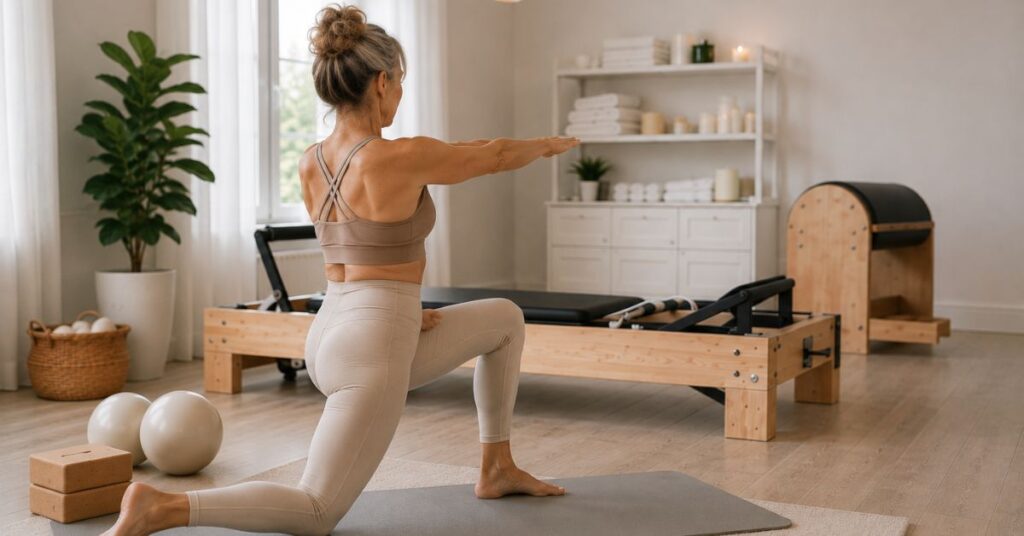
The first is what I call your Independence Muscles. Your legs, your hips, your glutes, your core, your back. These are the muscles that get you up off the floor, carry the groceries in, take the stairs, work in the garden, and let you keep doing the things you love.
The second is the handful of basic movements your real life is actually made of. Squatting, hinging, lunging, pushing, pulling, and rotating. Train those, and everyday life gets easier, because you’re rehearsing the exact things your day asks of you. We’re never doing exercises for the sake of exercises.
Why Slower Movement Builds More Strength
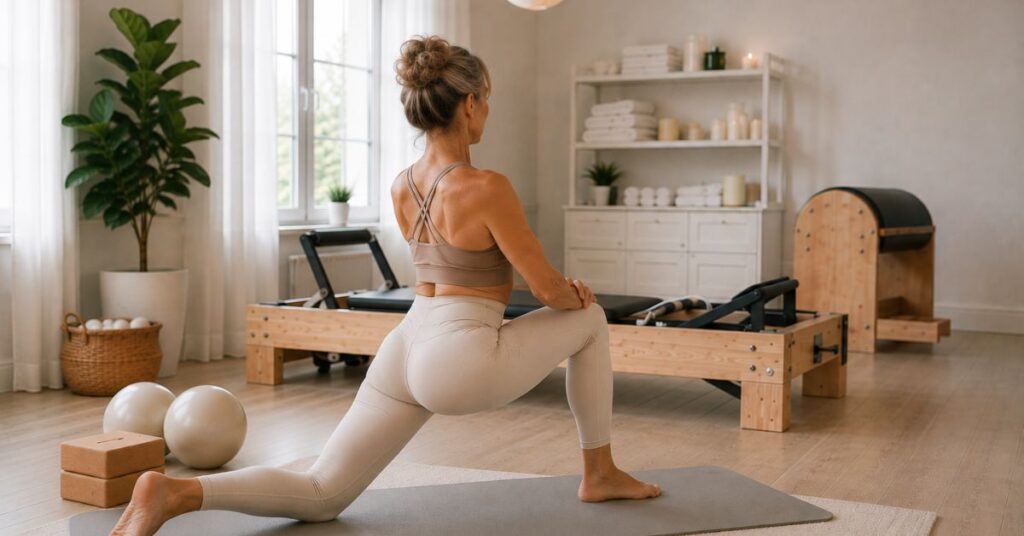
Here’s the part that surprises people most, and it’s where yoga has a real advantage. The slower you move, the stronger you become.
When you slow down, you take away the momentum that lets you cheat through a movement, and the muscle has to do the actual work. It stays under tension longer, and that’s one of the real drivers of strength. Slowing down is also how you stay safe while you’re still learning a movement, which matters far more at this stage than how much you can lift.
Why Soreness Isn’t a Sign You’re Getting Stronger
I want to free you from something. Soreness isn’t the scoreboard. Being sore doesn’t prove you built strength, and not being sore doesn’t mean you wasted your time.
When researchers compared people who barely got sore with people whose muscles showed far more damage, both groups built almost exactly the same amount of strength. What builds strength is steady, controlled work, not how wrecked you feel the next day. So please stop measuring your practice by how much it hurts. That measure has talked more good people out of a practice that was actually working than almost anything else.
How Building Strength Protects Your Joints
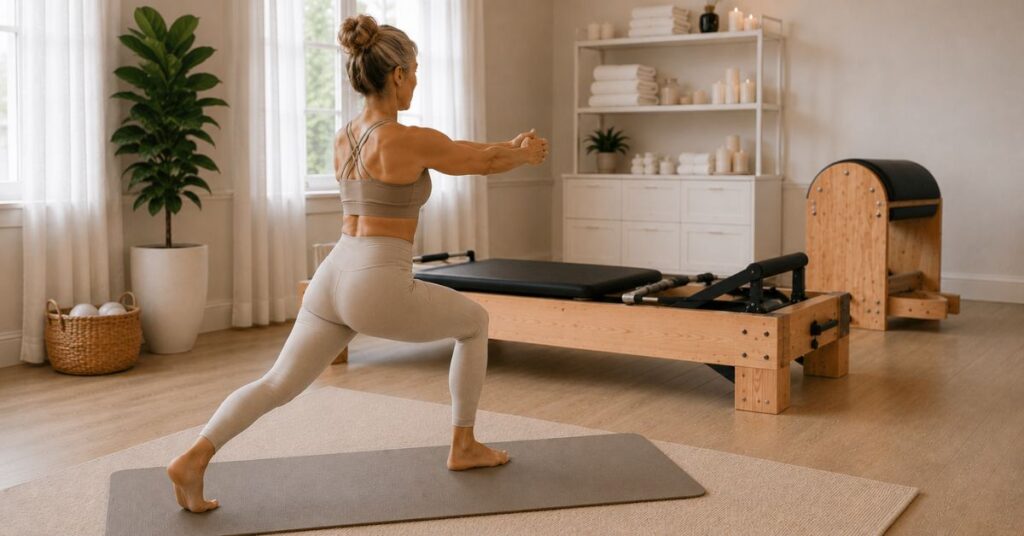
There’s one more piece I never want left out, because it matters most for the bodies I work with. Stability.
When we build strength you can actually control, we’re supporting and protecting your joints, and that often means less pain in your ordinary day. Strength you can control protects a joint. Strength you can’t control doesn’t. That’s a big part of why we move the way we do, slowly, with attention, feeling the muscle we mean to work.
Building Strength You Can Sustain for Life
If you take one thing from this, let it be this. You don’t have to earn your strength through punishment, and you’re not behind because you chose a gentler door in.
You’re building the exact thing that keeps your world from getting smaller. And you’re doing it in a way your body can actually sustain, not for a six-week challenge, but for the rest of your life.
P.S. This strength work is the foundation of my new beginner program, Lifelong Yoga Foundations. If you want to be first to know when it opens, and get in at the best price, you can join the priority interest list here. The list hears everything first.